Enma López and Reyes Maroto both surpassed the required endorsements to run for PSOE’s Madrid mayoral nomination. The party now faces a contested primary, with the winner set to challenge Almeida in 2027.
Madrid’s race for the PSOE mayoral candidacy has taken an unexpected turn. Both Enma López, the deputy spokesperson and surprise contender, and Reyes Maroto, the current party leader in the city council, have secured enough endorsements to compete in the upcoming primaries. Each needed at least 823 signatures from party members to qualify. Despite doubts within the party about López’s ability to mobilize support, both candidates exceeded the threshold, setting the stage for a rare internal contest ahead of the 2027 municipal elections.
The endorsement process concluded at noon on Saturday, with both López and Maroto submitting their physical signatures just before the deadline. Electronic endorsements were also counted, with preliminary figures showing López received 587 online and Maroto 186. Maroto claimed on social media to have gathered over 1,400 total endorsements, while López has yet to comment publicly on her final tally. The PSOE has confirmed that both surpassed the minimum, but the exact numbers will be released later in the day.
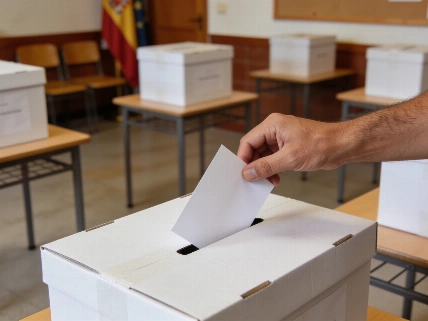
The primary campaign will now unfold over the coming week, culminating in the first round of voting on July 19. With around 5,400 PSOE members in Madrid eligible to vote, a second round is scheduled for July 26 if neither candidate secures more than 50% of the ballots. The winner will become the party’s official challenger to José Luis Martínez-Almeida (PP), who has already announced his intention to seek a third term as mayor. Meanwhile, Más Madrid has reaffirmed Rita Maestre as its candidate after she won 81.2% support in her party’s own primaries.
López’s decision to enter the race two weeks ago caught the party’s national leadership off guard, as Maroto had been considered the clear favorite and the preferred choice of Ferraz. The two candidates spent the past five days canvassing Madrid’s districts, seeking support from grassroots members. López’s campaign, marked by a strong social media presence and a style reminiscent of New York’s Zohran Mamdani, challenged the party’s recent approach of appointing candidates from above. Her message focused on the need for change and greater involvement of local members in candidate selection, contrasting with Maroto’s emphasis on stability and her record of reversing PSOE’s declining seat count in the city council since taking over in 2023.
Within the PSOE, opinions have been divided. Some doubted López’s ability to rally enough support, while others saw her campaign as a sign of shifting dynamics among Madrid’s socialist base. Maroto, who previously served as Minister of Industry, has highlighted her experience and the party’s improved results under her leadership—moving from eight seats with Pepu Hernández to eleven in the last election. López, on the other hand, has argued that members are frustrated with top-down candidate selection, pointing to less successful outcomes in other regions where similar strategies were used.
As the primary campaign begins, both candidates have addressed the possibility of working together after the vote. Maroto has taken a cautious stance, preferring to focus on the immediate contest, while López has indicated she would include Maroto in her team if victorious, according to Europa Press. The outcome of this internal battle will determine who leads the PSOE’s challenge against Almeida, with the party aiming to reclaim the mayoralty for the first time since Juan Barranco’s tenure ended in 1989.
This contested primary reflects broader tensions within Spain’s political landscape, where party leadership and grassroots members often clash over candidate selection and strategy. Similar dynamics have been observed at the national level, as highlighted in recent coverage of internal pressures on PSOE leadership, such as the calls for Pedro Sánchez to step down to prevent a far-right government, discussed in this related report. The outcome in Madrid may signal how much influence local party members will have in shaping PSOE’s direction ahead of the next electoral cycle.
Madrid’s mayoral primaries are closely watched not only for their immediate impact on the city’s political future but also for what they reveal about the evolving relationship between party leadership and the rank-and-file. The result could influence how other parties approach candidate selection and internal democracy in the run-up to 2027.