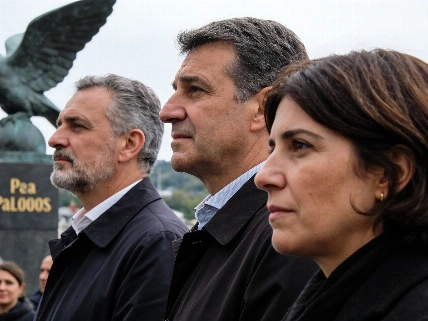
Euskadi has a “very special agenda” in the coming legislative elections, Aitor Esteban said. He argued that the absence of a constructive Basque voice in Madrid would harm self-government and the public. Esteban, president of the Partido Nacionalista Vasco (PNV), casts the party’s parliamentary presence as a way to defend Basque interests and protect what he has called the “Basque house”, without committing it to unconditional support for any Spanish government.
In an interview with La Vanguardia on 14 November, reported by Europa Press, Esteban predicted that the first months of a government formed by the PP and Vox would bring an “ofensiva total” (“total offensive”, translated from Spanish) aimed more at the PNV than EH Bildu. He tied that prospect to the PNV’s defence of Euskadi’s self-government within Spain.
He ruled out joining or negotiating majorities that include Vox, saying this would conflict with the PNV’s values. The party rejected such an arrangement three years earlier, Esteban said. He also said he did not want to repeat the current legislature, describing the prospect as “Chubasquero, paraguas y aguantaremos” (“Raincoat, umbrella and we’ll hold on”, translated from Spanish). Neither a PP-Vox government nor a continuation of the current governing formula is the PNV’s preferred scenario, he has said.
The comments come ahead of Spain’s general election, scheduled for 29 November 2026. Esteban said he expected the PNV to retain a parliamentary group in the Congress of Deputies despite polling concerns. He presented its presence in Madrid as a way to defend Basque interests while negotiating on specific issues. The party has ruled out participating in a majority involving Vox but has not described itself as automatically aligned with the incumbent governing bloc.
On EH Bildu, Esteban said the parties share the same territory but have “absolutely different” models for the country, with sharply differing economic and social proposals. He argued that institutions should set a medium- and long-term direction, working with civil society and businesses while involving social partners in making the economic agreement function.
The PP’s national spokesperson, Borja Sémper, has accused the PNV of becoming a “subordinate” of the Socialist-led government and said it was incapable of resolving problems affecting Basque citizens. The dispute has also centred on which party best represents Basque interests in Madrid.
Esteban called deindustrialisation in the Basque Country inconceivable. He identified innovation and a rapid European response to China and US tariff policy as the two main economic challenges.
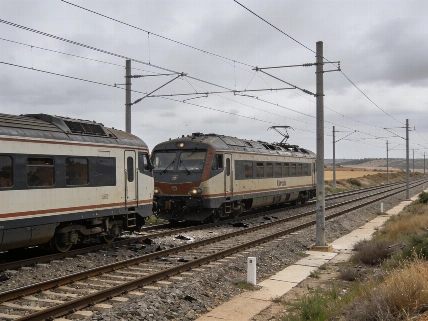
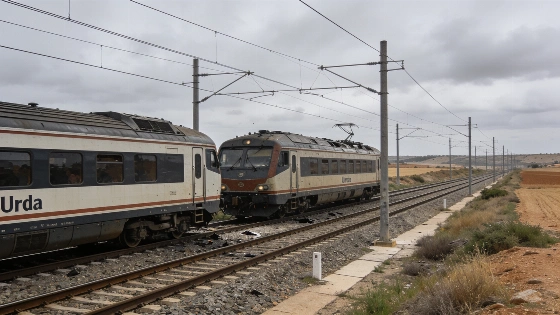
On rail, he said it “sería un cachondeo” (“would be a joke”, translated from Spanish) if the Basque high-speed network remained unfinished despite the work already being done. He also criticised the socialist government’s focus on general public transport subsidies over spending on network maintenance. A separate report on Adamuz track repairs concerned maintenance records on another line.
On immigration, Esteban called for a “plan serio” (“serious plan”, translated from Spanish) from the Spanish state and described current management as chaotic. He said public resources for housing and healthcare are finite, also citing education as an area where migration needs to be organised to support integration.