Nearly 80,000 migrants entered Ceuta at once on 30 July, according to the account of the crisis that shaped the European Commission’s border reform debate. On 27 October 2026, the Commission proposed a new regulation that would gradually increase Frontex’s standing corps to 30,000 officers. Frontex’s own personnel would double, while a new 17,000-member European border and return reserve would join 7,000 officers already seconded by Member States. The reserve could be deployed when national authorities need support.
The plan is a proposal, not a force already deployed. It must be agreed by the European Parliament and the Council of the EU before it can take effect. Commissioner for Internal Affairs and Migration Magnus Brunner said the strengthened agency should support Member States when and where required, including with returns. The Commission presented the expansion as a response to irregular migration and organised smuggling. It also cited the instrumentalisation of migration, online disinformation and hybrid threats. Brunner described a proposed rapid-response force that could deploy within 24 hours.
The proposed crisis-response arrangements include a Quick Reaction Force and an Online Monitoring and Response Centre. The centre is intended to identify dangerous trends earlier, improve information exchange and support timely intervention. The Commission’s press-conference materials cited lessons from sudden arrivals, including Ceuta in summer 2026. The Commission also said illegal border crossings were at their lowest level since 2021, down 55% over the previous two years.
The proposed changes also cover returns. The Commission wants a new digital architecture and simpler administration to cut processing times and speed up deportations. The package would establish a dedicated Return Coordination Centre. It would also give Frontex a stronger role in coordinating EU-wide return operations, including support for returns involving third countries. The Commission says the changes are intended to make these operations more effective and cost-efficient. The measures are meant to address delays; the announcement does not mean the new system is already in operation.
The response in Ceuta offers a specific example of the coordination problem. Spanish Prime Minister Pedro Sánchez acknowledged that the government could have handled the crisis better. Interior Minister Fernando Grande-Marlaska waited a month before requesting Frontex’s naval presence and help with migrant triage.
Pressure on Madrid had also featured in coverage of Vivas’s appeal, after Ceuta president Juan Jesús Vivas urged the Spanish government to act on migration. The account of the crisis said that nearly three months after the mass arrival, thousands of migrants remained in the streets and in accommodation camps, despite promises to return those without the right to stay.
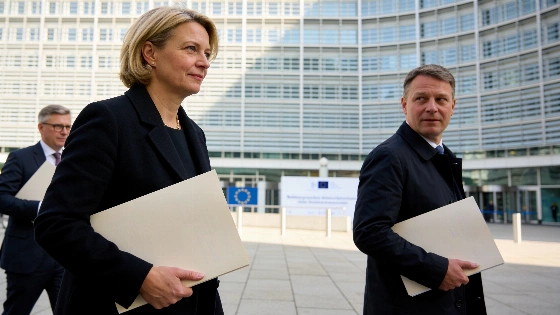
When the reform was unveiled, it still required approval by the European Parliament and the Council of the EU. The proposed staffing levels therefore did not represent an immediate change on the ground. The Commission’s press conference featured Henna Virkkunen, Executive Vice-President for Tech Sovereignty, Security and Democracy, alongside Brunner.