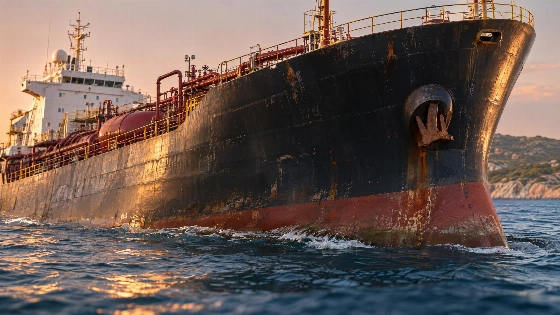
When Emilio Rodríguez Díaz gave his interview, the Med Emre was listing at about 90 degrees and could not navigate, the maritime safety professor said. Authorities had reported no fuel leak at that stage. Later on November 26, reports described the Malta-flagged chemical tanker as having sunk or capsized about 25 to 30 nautical miles north to northwest of Ibiza.
The tanker, carrying about 7,000 metric tonnes of gasoil, suffered a breach around 25 miles northeast of Ibiza while sailing from Algeciras to Barcelona. The Balearic government activated level 2 of the National Maritime Pollution Contingency Plan alongside the regional civil protection plan. Rodríguez Díaz told Cadena SER’s Hoy por Hoy that the response level reflected the location’s vulnerability: a spill in the Spanish exclusive economic zone near the Balearics could affect posidonia seagrass and tourism. Spanish and Balearic authorities initially reported no visible signs of marine pollution and activated emergency arrangements to monitor the wreck and surrounding waters for possible fuel release.
His assessment of the incident also appears in earlier coverage of the sinking. Rodríguez Díaz compared the cargo with the Prestige, which carried 77,000 tonnes of crude when it sank in 2002. He described the Med Emre’s load as about one-tenth of that amount, while noting that 7,000 tonnes remained a substantial quantity. The Med Emre was carrying diesel, a refined petroleum product, rather than crude oil.
The ship flew the Maltese flag and was managed by a Turkish company. Rodríguez Díaz said inspections dating from 2019 up to the casualty had found no deficiencies. He cited an intensive inspection in Algeciras in the year before the accident, followed by another in Italy in June. Neither identified a fault.
That record does not establish what caused the breach. Rodríguez Díaz said the CIAIM, Spain’s Commission for the Investigation of Maritime Accidents, would need to determine whether the vessel struck an obstruction or whether weather or watchkeeping played a part. He also raised the possibility of a shallow area along the route.
The expert said the ship’s double hull could reduce the risk of fuel reaching the sea. Under the MARPOL convention’s Annex I requirements cited in the interview, cargo tanks are separated from the vessel’s outer hull and bottom. The space between them can act as a buffer if the outer hull is breached. It cannot by itself establish whether the cargo tanks remained intact.
Rodríguez Díaz said the tanker had not fully sunk at the time of his interview: it remained afloat in a position that made it unfit to sail. He described recovery as a complex operation and noted that specialist teams capable of recovering such vessels operate in the Netherlands. Later reports said all 17 crew members were rescued, but one died after being taken to Ibiza’s Can Misses Hospital. Six others were hospitalized with relatively minor injuries, chiefly hypothermia. Reuters reported that emergency services continued monitoring for pollution after the sinking.