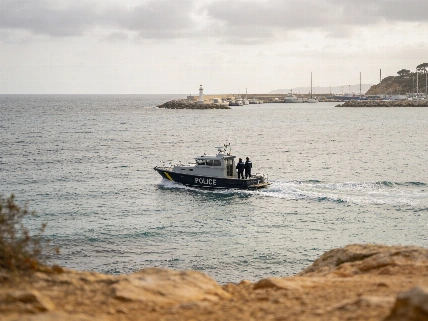
A permanent Frontex operation on the route between Algeria and the Balearic Islands would require an assessment of operational needs before Spain and the agency agreed on an operational plan. At a rally in Palma, Alberto Núñez Feijóo nevertheless pledged to ask the European Union for a permanent deployment as part of a wider plan to protect the islands’ maritime border. Regulation (EU) 2019/1896 sets the framework for Frontex support at the EU’s external borders, with the agency and the host member state working together on operations.
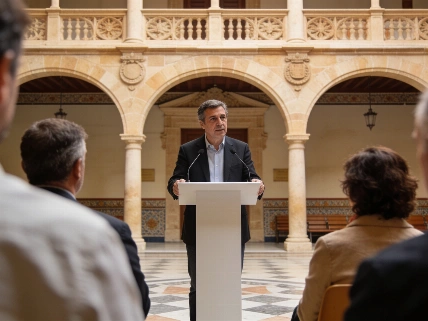
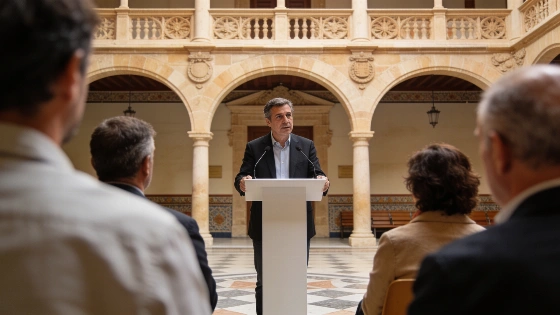
The PP leader told hundreds of people at the Sala Magna del Pueblo Español that a government led by him would seek tighter border controls and a tougher response to crime. He also promised a million new homes. These were campaign pledges, not measures already in force.
Feijóo said the proposed island plan would target smuggling networks and the people who assist them. It would also bring stronger checks, including checks on the age and criminal records of people arriving, under the EU Returns Regulation. Under Regulation 2019/1896, member states can request joint operations, but Frontex must assess risks and needs before agreeing an operational plan with the host state. The European Border and Coast Guard framework supports coordinated management of external borders. It was expanded after gaps emerged in national contributions of border guards and technical equipment.
In the European Commission’s annual migration-management assessment, Commissioner for Internal Affairs and Migration Magnus Brunner said Spain accounted for around 20% of irregular border crossings across the EU and ranked third among member states for arrivals through search-and-rescue operations. The Commission’s assessment covered the Canary Islands and the Balearic Islands, as well as Ceuta.
His remarks on criminal penalties were more categorical than the law allows. Feijóo said foreign offenders would be expelled while Spanish offenders would pay for their crimes. Article 89 of the Código Penal allows certain prison sentences imposed on foreign nationals to be replaced by expulsion, subject to legal conditions and judicial safeguards. It does not require the automatic expulsion of every foreign national convicted of an offence.
He also promised tougher penalties for repeat offending and serious crimes. The legal framework had already changed: Ley Orgánica 1/2026 entered into force in April and amended the Código Penal and the Ley de Enjuiciamiento Criminal to strengthen the response to repeat offending, particularly property crimes.
On policing, Feijóo cited a crime rate he described as 15 times the Spanish average and said the islands had a thousand vacant posts across the Policía Nacional and Guardia Civil. Those figures came from his speech. He promised to fill vacancies and restore a visible police presence in neighbourhoods, while also tackling squatting and the deterioration of public spaces.
Housing formed another part of the programme. Feijóo blamed Pedro Sánchez’s government for what he called Spain’s worst housing shortage and promised that a PP government would build one million homes. His proposals include reducing bureaucracy and taxes, with particular attention to young people, and giving greater protection to owners and tenants.
He also called for a law allowing squatters to be removed within 48 hours. The report notes that Interior Ministry figures put complaints of unlawful occupation and trespass at a small proportion of Spain’s housing stock. It also cites the Consejo General del Poder Judicial, which has said that most related proceedings concern vacant properties rather than primary residences.
Feijóo used the rally to accuse Sánchez’s government of weakening public services and linked alleged corruption around the PSOE to a lack of investment. A separate report on Rodríguez’s complaint concerns claims about alleged PSOE financing; it is a distinct case. Feijóo argued that public services required budgets and investment planning.
Balearic PP leaders pressed their own demands. Marga Prohens criticised the central government over regional powers and called for lower taxes on young people buying a first home. She distinguished migrants who come to work and integrate from people who commit crimes. Mallorca council president Llorenç Galmés called for stronger border controls, while Palma mayor Jaime Martínez asked for a state housing plan and legal changes to improve access to homes.