The family of Juan José Mutilba, missing at sea between Italy and Greece, calls for more resources. His wife spent days adrift before raising the alarm. Authorities coordinate efforts amid uncertainty.
The search for Juan José Mutilba, a 66-year-old retired businessman from Burgos, remains unresolved after he fell overboard in the Mediterranean last week. His family is pressing for increased resources and official support, highlighting the difficulties faced since the incident occurred between Italy and Greece. The case has drawn attention due to the delay in alerting authorities and the complex international coordination required for maritime rescues in this region.
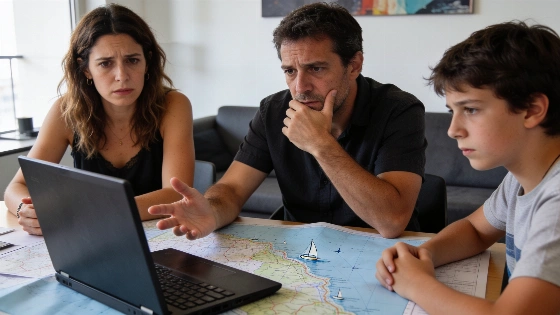
Mutilba disappeared after slipping on his boat, Theorema, reportedly while handling a freshly caught tuna. His wife, unable to stop the new and unfamiliar vessel, lost sight of him and drifted for three days without communication before finally reaching help. The family, now back in Spain, describes days of high stress and uncertainty, with Sergio Mutilba, the missing man's son, emphasizing their hope despite the odds. He notes that his mother struggled to operate the larger boat, which the couple had only recently acquired, and that the emotional toll has been severe, requiring medical attention upon her return to Madrid.
Efforts to locate Mutilba have involved both Italian and Greek authorities, with Spain's Salvamento Marítimo acting as a liaison. Updates are provided every 12 hours, but the family says official communication from the Spanish government has been lacking. Sergio Mutilba recounts contacting the Ministry of the Interior, only to receive no clear guidance or follow-up. Meanwhile, a relative has visited the Spanish consulate in Rome to clarify which protocols are in place. The family remains concerned about the time lost before the search began and the limited information available about ongoing operations.
As reported by EL PAÍS, the incident occurred during a voyage from Sicily to Pilos, Greece, a route the couple had chosen as part of their post-retirement travels. The family has split responsibilities, with one son staying in Greece and another supporting their mother in Madrid. The emotional impact is evident, with the mother reluctant to return to Burgos and struggling to process the loss. The family continues to appeal for more active involvement from Spanish authorities and for additional search resources to be deployed in the area.
This case is not isolated. Similar incidents have highlighted the challenges of international maritime rescues, especially when communication delays occur. According to previous reports on comparable disappearances at sea, coordination between multiple countries can slow response times and complicate rescue efforts. The Mutilba family's experience underscores the need for clear protocols and rapid action when Spanish citizens are involved in emergencies abroad. As the search continues, the family holds onto hope, but the situation remains uncertain, with each passing day making recovery more difficult.
For context, Spain has seen a rise in recreational sailing among retirees, with many choosing to explore the Mediterranean. While most journeys are uneventful, incidents like this reveal gaps in preparedness and the importance of training for all crew members, regardless of experience. The case also brings attention to the psychological impact on families and the necessity of support services for those affected by maritime accidents. The outcome of the search for Juan José Mutilba may influence future protocols for international cooperation in similar emergencies.