A deadly stabbing in Manresa has triggered a wave of misinformation. Far-right groups blame Maghrebi migrants, but police confirm the suspects are Spanish minors. The incident exposes deep divisions over security and immigration in Catalonia.
Just hours after a fatal stabbing at Manresa’s festival, far-right parties in Catalonia began blaming migrants for the violence—even though police had already confirmed the suspects are Spanish minors, not Maghrebi immigrants. The killing of Carles Vilajosana, a 45-year-old father, quickly became a political flashpoint as rumors and false claims spread both online and in the streets.
Sílvia Orriols, leader of Aliança Catalana, was among the first to accuse “Moroccan minors” of the attack, posting inflammatory messages and sharing AI-generated posters to rally supporters. Vox soon echoed these claims, calling for protests against what they described as a surge in crime linked to foreign youth. Both parties ignored official statements and instead fueled public anger with unverified accusations.
According to Catalonia’s Interior Ministry, both suspects in the Manresa killing were born in Catalonia and are not unaccompanied foreign minors, contrary to claims spread on social media.
The facts, however, are clear. According to Catalonia’s Interior Ministry, both detained suspects are Spanish citizens—one with Moroccan parents, both with family ties in Manresa. This did little to slow the far-right mobilization. Hundreds gathered in the city’s main square demanding justice and tougher measures against youth crime. The victim’s family, including his sister Yolanda Vilajosana, joined calls for answers, but some attendees later said they felt used by political groups seeking to exploit their grief.
Junts per Catalunya, looking ahead to next year’s municipal elections, also toughened its stance, suggesting that foreign nationals convicted of serious crimes should be deported after serving their sentences. In this case, though, the suspects are not foreign nationals. The city’s mayor, Marc Aloy, condemned the spread of false information and warned against blaming entire communities based on origin. He emphasized that the real issue is youth violence, not immigration status.
Residents of Les Escodines, where the stabbing happened, described ongoing problems with local youth gangs, including the two suspects, Pere O. and Otman A., both of whom have prior records for violent offenses. Some Maghrebi residents said they felt unfairly targeted and pointed out that they too suffer from the actions of a few, while also facing racist backlash. The sense of insecurity is real, even though official crime statistics show Manresa’s rate is below the Catalan average, with violent robberies recently decreasing.
The investigation determined that the fatal incident occurred during a nighttime brawl between two groups of 4–5 people at the Festa Major, not as a targeted attack by migrants. Authorities have placed both detained minors in closed custody, with one also receiving therapeutic treatment, and are still searching for two additional suspects from the same group.
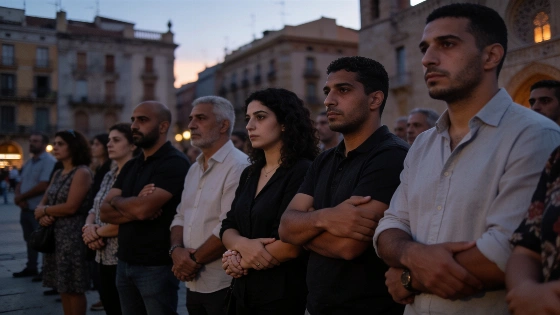
In the days since the killing, public marches and silent vigils have filled Manresa’s streets. Nearly a thousand people walked from Plaça Neus Català to city hall in a demonstration without party banners, honoring Vilajosana and expressing frustration with violence. City officials have urged caution against alarmist rhetoric, warning that exaggerated claims of lawlessness can themselves fuel fear and division.
Calls for harsher penalties and stricter controls on youth offenders have grown louder, echoing similar debates across Spain. As reported earlier, one of the suspects had recently been released from a juvenile center after a previous stabbing, raising questions about the effectiveness of current juvenile justice measures.
What stands out in Manresa is how quickly political actors tried to use the tragedy for their own ends. The facts—Spanish minors with prior records, not foreign migrants—were quickly drowned out by a campaign of misinformation. This episode shows how easily public pain can be hijacked by those looking to inflame tensions, and how fragile social trust becomes when facts are ignored for political gain. For Manresa and for Catalonia, confronting youth violence will require honest debate and real solutions, not scapegoating or opportunism.