The Partido Popular has unveiled a new stance on Morocco as the Ceuta occupation crisis drags on. Feijóo’s team rejects Madrid’s passive approach and calls for a reset in bilateral relations. The move signals a break with years of Spanish caution.
The Partido Popular (PP) has sharply shifted Spain’s political debate by releasing a six-point plan that redefines its approach to Morocco. The move comes as the government faces criticism for its handling of the ongoing crisis in Ceuta, and as pressure mounts on the PP, led by Alberto Núñez Feijóo, to offer a clear alternative to the current policy.
The immediate trigger was a statement from the Moroccan government, which criticized Spanish institutions and appeared to single out the PP. Rather than backing down, Feijóo’s team responded with a document that breaks from Madrid’s usual reluctance to challenge Rabat. The PP’s statement rejects the longstanding "do not disturb" approach to Morocco, especially under the current government, and directly accuses Morocco of playing a role in the Ceuta border incident.
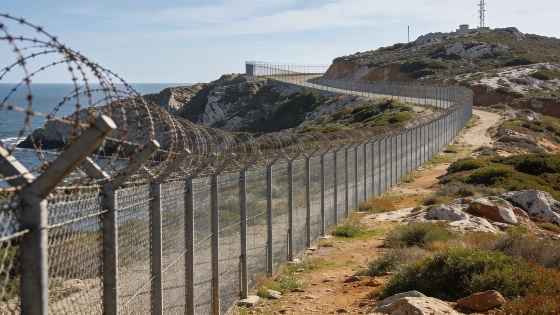
In late July 2026, independent reports estimated that over 70,000 people crossed into Ceuta in what was described as a mass border event.
For years, Spanish authorities have allowed Morocco’s interests to shape bilateral relations. The PP now signals it is ready to end this pattern, even if it risks diplomatic fallout. Party leaders argue that Spain should stop giving ground and instead defend its own priorities, especially when it comes to territorial integrity and national interests. According to El País, Feijóo initially used careful language but, by early September 2026, told Congress that the border operation "came from Morocco," was "allowed by Morocco," and, based on available evidence, may have been coordinated by Moroccan authorities.
Recent figures show the scale of Spain’s ties with Morocco. In 2025, 3.5 million Moroccans crossed Spanish territory during the ‘Paso del Estrecho’ operation. That year, remittances sent from Spain to Morocco reached nearly 1.6 billion euros, according to the Bank of Spain. These numbers highlight the leverage Spain holds—a point the PP now seems prepared to use. While these figures are widely cited, official statistics for the Paso del Estrecho and the Bank of Spain’s remittance report should be checked for exact details.
Spanish policymakers have long worried that confronting Morocco could trigger new waves of migrants in Ceuta or Melilla, or threaten cooperation on counterterrorism. The PP’s new stance suggests a reversal: Morocco should now consider the consequences of Spanish actions, not just the other way around. The party frames Ceuta and Melilla as issues of national security and territorial integrity, arguing that defending the border is Spain’s responsibility. Both Feijóo and Ceuta’s president, Juan Jesús Vivas, have made this point in recent statements.
The Moroccan Ministry of Foreign Affairs officially denied any involvement in the mass border crossing, telling Reuters on September 10, 2026, that there was no evidence of Rabat’s participation and rejecting attempts to draw Morocco into Spain’s internal political disputes.
The PP described Morocco’s recent statement as a mix of falsehoods and half-truths. Feijóo’s response marks a clear break from the inertia that has shaped Spain’s foreign policy. The party’s six principles are meant to put Madrid back in control and end what it sees as years of Spanish hesitation in the face of Moroccan pressure. Local and national media report that Ceuta’s authorities support the PP’s tougher line, with President Vivas stating that "Morocco is behind the blow," citing available evidence and his own conviction.
This shift comes as the PP leads in national polls and is widely seen as the main challenger to the current government. The party’s willingness to take a firmer stance on Morocco could reshape the debate over Spain’s external borders and its relationship with a key neighbor. As seen in other recent political disputes, such as the Catalonia Diada, the tone set by opposition parties can influence broader policy changes.
The question now is whether the PP will turn its declaration into real policy if it comes to power. Party leaders insist that "nothing stands above the defense of Spain," a phrase that sums up their new approach. If Feijóo’s team avoids falling back into the old habit of cautious pragmatism, Spain could see a government more willing to defend its interests. Whether this new posture survives the transition from opposition to office remains to be seen.