

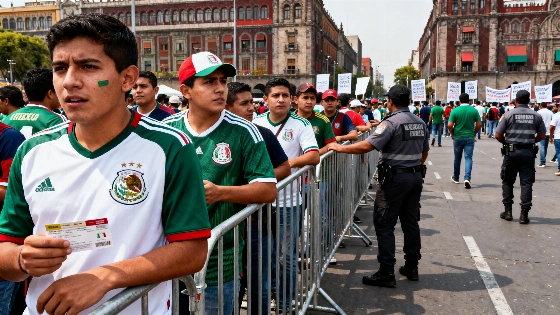
FIFA has advanced the Mexico-England World Cup match to midday to avoid forecasted storms. The Brazil-Norway game may also see a time change. Safety concerns and recent incidents in Mexico influenced the decision.
FIFA has announced a significant change to the World Cup round of 16 schedule, moving the highly anticipated Mexico-England match to an earlier time slot. Originally set for 18:00 local time, the game will now kick off at 12:00 midday in Mexico, corresponding to 20:00 in Spain. This adjustment comes in response to severe weather forecasts predicting afternoon storms in the host city, raising concerns about player and spectator safety.
The decision to reschedule was made to minimize the risk of disruption from thunderstorms, which have been a persistent threat during the tournament. FIFA emphasized that the move is part of a broader commitment to prioritize safety whenever adverse weather conditions are expected. The organization has consistently stated that matches would be adapted as needed to protect both teams and fans from the dangers posed by electrical storms.
In addition to the Mexico-England fixture, FIFA is also considering a time change for the Brazil-Norway match. The proposed adjustment would see the game pushed back from 17:00 to 18:00 local time, shifting the start in Spain from 22:00 to 23:00. This potential change is under review, with the aim of ensuring optimal conditions for all involved and reducing the likelihood of weather-related incidents.
Recent events in Mexico have heightened the sense of urgency around these decisions. Celebrations following earlier matches resulted in four fatalities, underscoring the risks associated with large gatherings during periods of unstable weather. FIFA's move is intended not only to safeguard those attending the matches but also to prevent further incidents linked to crowd management and adverse conditions.
While the primary motivation for the schedule changes is safety, the new timing for Mexico-England may also benefit English broadcasters, as the match will now air during prime viewing hours in the United Kingdom. Although this factor was not cited as decisive, it is likely to increase the match's visibility and audience engagement in England.
Weather-related disruptions have become a recurring theme in major sporting events, prompting organizers to adopt more flexible approaches to scheduling. The current World Cup is no exception, with FIFA demonstrating a willingness to adapt quickly in response to evolving forecasts. This approach mirrors recent adjustments seen in other international tournaments, where safety and logistical considerations have taken precedence over traditional scheduling.
For context, similar challenges have affected other World Cup fixtures, as seen when Switzerland faced Algeria in a high-stakes knockout match that drew attention for its own set of logistical hurdles. More details on how weather and scheduling have impacted previous tournaments can be found in this analysis of a recent Switzerland-Algeria clash: how Switzerland and Algeria navigated their World Cup knockout stage.
As the tournament progresses, FIFA's handling of these scheduling challenges will remain under scrutiny. The organization has reiterated its commitment to making real-time decisions based on the latest weather data and public safety information. For fans in Spain and across the globe, these changes mean adjusting plans, but they also reflect a growing emphasis on safety and responsible event management in international football.



