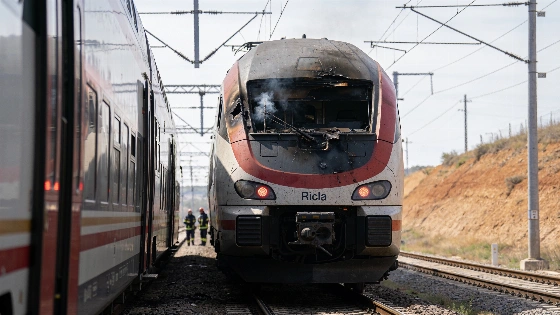
Flames in an AVE’s rear cab forced 283 passengers off near Ricla. Two received care for dizziness as the fire halted 40 train movements on a holiday.
The train was between Calatayud and Zaragoza when flames broke out near Ricla. The fire damaged the rear cab and the first passenger carriage, according to reports. Two travellers needed medical attention for dizziness, including a passenger with reduced mobility. The blaze stopped high-speed traffic between Madrid and Barcelona for five hours.
The disruption hit a busy holiday service. Adif recorded 40 affected train movements, while Renfe estimated that 4,000 to 5,000 passengers were held on trains when the incident occurred. Renfe and Iryo services were caught up in the interruption. Ouigo trains were affected too. El Independiente put the number of passengers delayed on other trains at a minimum of 4,000.
Most evacuated passengers continued their journey by bus; the passenger with reduced mobility was taken onward separately by taxi.
The AVE had left Atocha at 14:27 for Figueres. The fire was detected in its rear cab around 16:05, near Ricla. Renfe described it as a small fire, but passenger videos showed intense flames and a badly damaged cab. EFE reported that all 283 passengers were evacuated under the safety protocol.
Firefighters from the Zaragoza provincial fire service reached the train despite a steep embankment that made access difficult. Passengers were moved away from the burning convoy to a safe area.
Renfe said there were no injuries. The Government of Aragón reported that two people received care for dizziness. La Provincia also reported that one of the two passengers had reduced mobility.
Onboard staff handed out food from the café, while Civil Protection brought water. After waiting several hours, passengers walked to a more accessible point, where buses took them onward. Travellers formed a human chain to move luggage from the carriages to the buses.
The reports available do not identify a technical cause for the fire or cite a completed investigation. They confirm where and when the fire was found and describe its effects on the line, but do not establish why it started.
The medical assistance involved dizziness, not the infection risk described in a separate meningitis report. Passengers faced long waits and disrupted connections. Rental-car companies saw unexpected demand, and some ran short of vehicles. Renfe offered affected customers refunds or changes without an extra charge, but trains for the following day quickly sold out.
Long queues and confusion built up at Atocha and Zaragoza as travellers searched for alternatives. Barcelona Sants also saw passengers looking for onward travel. The line did not reopen until close to 21:00, and then only gradually. The burning train remained beside the track, and the overhead catenary was damaged, according to El Periódico de Aragón. Adif said services would resume in stages after the fire was extinguished and the infrastructure checked. Trains initially had to use a single track between Ricla and Plasencia de Jalón.
Trains resumed with accumulated delays and at reduced speed through the affected section. Renfe coupled trains where possible to carry more passengers. The line was already running at lower speeds following the Adamuz accident. The reported account did not establish whether the damaged track would remain out of use on Tuesday.