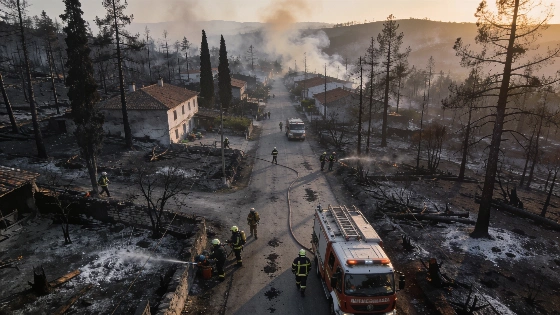
A night of fires in Ceuta destroyed more than 40 makeshift shelters at the Naves del Tarajal migrant camp. Emergency crews responded quickly, and no injuries were reported. The fires follow a week of escalating attacks on families living in the camp.
Ceuta woke to the aftermath of a night of fires that swept through the Naves del Tarajal migrant camp, burning more than 40 tents and shacks. Emergency crews spent two hours containing the flames and managed to evacuate the roughly 200 people living there—many of them families with children—without injury. Most had been staying in the informal camp for over a month, unable to access official housing.
This was not the first sign of trouble. Earlier in the week, masked attackers threw stones at the camp at night, frightening families as they slept. The violence escalated when a six-year-old boy named Ali was seriously injured by pellet gun fire while inside his tent with his parents and brother. According to a police report filed by his mother, the attackers shouted threats in dariya, warning, "We are going to burn you." No arrests have been made in connection with either the assault or the fire.
According to several Spanish media outlets, emergency services confirmed that there were no injuries in the Tarajal camp fire, as all residents were evacuated as a precaution.
Police say the most recent fire likely started due to negligence inside the camp, but the repeated threats and attacks have left many residents uneasy. The lack of official housing has created a tense situation, where even small incidents can quickly become dangerous. Reports from La Sexta and other Spanish news sources say the cause of the fire is still under investigation, with both accidental and intentional origins being considered.
The damage extended beyond the camp. In the Polígono Virgen de África area, several vehicles, a truck, and waste containers were set on fire. Police have detained a worker from the public cleaning company Servilimpce, accusing him of starting this and other fires in the city during the week. The suspect has already appeared before a judge. Another fire broke out near the Polígono Díaz-Flor, damaging more vehicles and a container, but no arrests have been made in that case. Local media report that these incidents are being investigated as part of a wider pattern of arson and unrest in Ceuta.
By morning, the city’s fire and rescue service counted 42 destroyed shacks, eight vehicles, and four containers lost to the flames. The series of incidents has put pressure on local authorities to address both immediate safety concerns and the ongoing lack of secure housing for migrants in Ceuta.
In the days leading up to the Tarajal camp fire, Ceuta experienced a series of arson attacks targeting cars and waste containers in various neighborhoods. Local emergency crews responding to these incidents were reportedly attacked with stones, resulting in at least one injury among responders. No arrests have been made in connection with these assaults, according to Spanish news reports.
Ceuta’s recent troubles echo emergencies elsewhere in Spain, where fires have strained emergency services and public safety. As reported earlier, major fires in other regions have tested local responses and highlighted the need for better support systems.
The situation in Ceuta is a warning. When people are left without stable shelter or protection, the risk of violence and disaster grows. The lack of arrests after explicit threats and attacks raises questions about local policing and the willingness to protect vulnerable families. Until authorities address both the immediate dangers and the ongoing neglect, migrant families in Ceuta remain at risk, and the city faces a deepening crisis of trust and security.