A flight instructor in Argentina jumped from a Cessna during a training flight, leaving his 22-year-old student to land alone. Authorities are investigating the incident as a possible suicide. The student managed a safe landing.
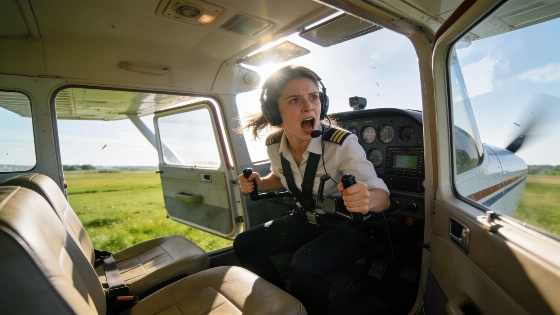
An aviation training flight in Argentina took a dramatic turn when a 42-year-old instructor, Leandro Andrés Bertazzo, exited a Cessna C-150 mid-air, leaving his 22-year-old student alone at the controls. The incident occurred over rural fields in the Río Segundo department, with the aircraft flying at approximately 250 meters altitude. The student, who was accumulating flight hours for her pilot license, was instructed by Bertazzo to take over and maintain course before he removed his headset, secured his phone, unfastened his seatbelt, and opened the aircraft door. Without further explanation, he stood up and jumped from the plane, according to the ongoing investigation.
Despite the shock and panic, the trainee pilot managed to stabilize the aircraft and immediately contacted the control tower by radio to report the emergency. She then returned to the Coronel Olmedo aerodrome and executed a safe landing. Emergency services, including the Flying Parrot Córdoba flight school team, rural police, and rescue personnel, launched a search operation for Bertazzo. Provincial prosecutor Patricia Baulies began examining the circumstances, focusing on the instructor's recent personal history and actions leading up to the event.
The main working hypothesis is suicide, though investigators have not ruled out other possibilities. Family members revealed that Bertazzo had recently sought psychiatric help and was experiencing a difficult period, information that had not been shared with colleagues at the flight school. Bertazzo, a commercial pilot with experience in Chile and four years as an instructor at Flying Parrot Córdoba, was described by peers as dedicated and approachable. On the day of the incident, he reportedly arrived at the school in good spirits, having asked a student to drive him from Córdoba, where he lived with his parents, instead of using his own car. He had also conducted a lesson with another student earlier that morning, with no signs of distress observed by staff or students.
This case has drawn attention to the mental health challenges faced by aviation professionals and the protocols in place for flight training safety. The investigation continues, with authorities reviewing Bertazzo's recent activities and personal circumstances. The incident echoes broader concerns about safety and emergency preparedness in aviation, similar to those raised in other recent transport-related emergencies, such as the evacuation of buildings in Barcelona following a major sinkhole. While the trainee's composure prevented further tragedy, the event has prompted renewed scrutiny of support systems for pilots and the importance of mental health awareness in high-responsibility professions.
Argentina's aviation sector, like many worldwide, requires rigorous training and psychological evaluation for pilots. However, incidents involving instructors are rare and often lead to reviews of existing procedures. The safe landing by the student highlights both the effectiveness of her training and the unpredictable challenges that can arise during flight instruction. As the investigation progresses, authorities are expected to assess whether additional measures are needed to support flight instructors and trainees, ensuring both safety and well-being in the cockpit.