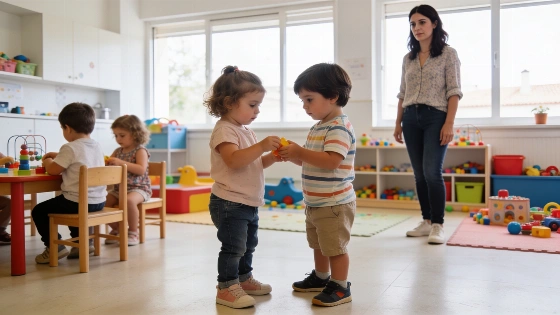
Castilla-La Mancha will eliminate fees for two year olds in 341 public nurseries starting in 2026. The regional government is investing over 14.6 million euros to support nearly 6,800 children, aiming to ease the burden on working families and boost access to early education.
From the 2026-2027 school year, families in Castilla-La Mancha with two year olds will no longer have to pay public nursery fees. The regional government is putting more than 14.6 million euros toward making preschool free for children aged two to three in 341 centers, reaching nearly 6,800 children across the region. Officials say this is part of a wider push to expand early childhood education and help families manage costs.
The funding will be distributed as grants to 305 municipalities, each in charge of admissions and making sure local families benefit. Toledo has the largest share, with 116 centers in 109 municipalities offering free places. Albacete, Ciudad Real, Cuenca, and Guadalajara are also included, though the number of spots depends on each town’s capacity and annual admissions. The rollout is happening in phases. In Guadalajara, for example, nearly 89% of infant schools are already covered, according to CLMPress.
More than 70% of the 3,513 new early childhood education places being created in Castilla-La Mancha are located in areas at risk of depopulation.
For parents, this means the core educational service for two year olds will be fully covered in participating public nurseries. Extras like meals, longer hours, or extra activities may still cost extra, and private nurseries are not included unless they are part of the municipal network. Each local authority sets its own application rules, usually requiring proof of residency and family details, and allocates places based on established priorities. Regional and local media stress that only the educational service is free; other services may still require payment.
The regional government describes the program as a way to help families balance work and childcare, especially in smaller towns where access to nurseries can determine whether parents—often mothers—can keep working. By removing fees for two year olds, officials hope to make early education more accessible and support families juggling jobs and caregiving. Reports from Toledo Diario and other outlets also point to the policy as a tool to address population decline and support parental employment, particularly in towns losing residents.
Enrollment for children aged two to three is still voluntary. Families must apply for a place, and the new funding does not guarantee a spot for every applicant. If there are more applicants than places, standard selection criteria will be used, and formal registration is required.
The scope of the free preschool program depends on municipal participation: according to SomoCLM, only those municipalities that have joined the initiative currently offer free places for two to three year olds, with the regional government promising further expansion based on local requests.
This measure does not replace other legal rights, such as reduced working hours for parents of young children, but adds another layer of support. Families should check with their local council for details on eligibility, deadlines, and how this new benefit fits with other family assistance programs.
As reported by Talent24h, the rollout of free nursery education for two year olds is a rare example of a regional government directly addressing the financial pressures on young families. The size of the investment and the number of municipalities involved show a clear effort to tackle both demographic challenges and gaps in early childhood education. The real impact will depend on how local authorities manage admissions and whether funding keeps up with demand.