Spain’s inflation hit 4.3 percent in August, the highest since February 2023. Fuel prices jumped by more than 21 percent, and government discounts did little to cushion the blow.
Spanish households are facing the steepest rise in inflation in over a year. In August, the national consumer price index (IPC) climbed to 4.3 percent, mainly because fuel and energy costs shot up by 21.3 percent. Everyday expenses are now at their highest since February 2023.
Several factors have driven this sudden increase. The ongoing war in Iran has unsettled global energy markets, and the Spanish government’s recent cutbacks on fuel subsidies have left drivers paying more at the pump. The National Statistics Institute (INE) confirmed these numbers, continuing a trend that began in July after a period of relative stability.
According to INE data, prices for fuels and lubricants for personal transport jumped by around 10% in just one month, while liquid fuel prices rose by 8.4%.
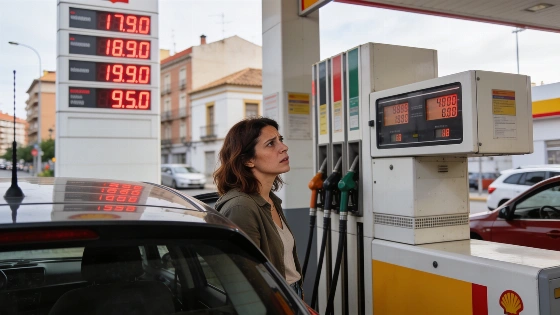
Transport costs have risen the most. The annual inflation rate for this sector reached 9.5 percent. Diesel prices went up by 30.3 percent, and petrol by 16.9 percent. Even with a 10-cent discount per litre on hydrocarbon taxes in August, the relief was brief. A safeguard clause in the government’s plan triggered a further diesel discount to 20 cents per litre for September, after diesel prices rose more than 15 percent in July. Petrol did not meet the threshold, so its discount dropped to 5 cents per litre this month, despite a nearly 17 percent increase in August.
Food and non-alcoholic drinks also became more expensive, with annual price growth at 2.3 percent—up seven tenths from the previous month. Some items saw much sharper increases: fresh berries rose by 35.7 percent, citrus fruits by 17.1 percent, green legumes by 15.9 percent, and eggs by 12.5 percent. Beef and fresh or frozen fish also cost more than before.
Outside supermarkets, the biggest annual price hikes were in liquid fuels (up 46.4 percent), diesel (30.3 percent), jewellery and wristwatches (24 percent), and waste collection services (22.7 percent). In contrast, domestic air travel dropped by 16.4 percent, international flights by 15.3 percent, train travel by 9.3 percent, newspapers by 5.9 percent, and package holidays by 5.4 percent.
Reuters highlighted that while headline inflation in Spain rose sharply in August, core inflation actually eased to 2.9%, indicating that the main pressure came from volatile energy and fuel prices rather than broad-based demand. This divergence between overall CPI and core inflation was also confirmed by INE and Investing.com data.
Compared to July, consumer prices rose by 0.7 percent. The main drivers were transport—especially higher fuel and lubricant costs for personal vehicles—and housing, where liquid fuel, electricity, and gas all increased. The biggest monthly jumps were in legumes (19.1 percent), car rentals (17.2 percent), and motorhomes (12 percent). Meanwhile, domestic air travel and train tickets became cheaper.
All of Spain’s autonomous communities saw annual inflation rise in August. Cantabria had the highest rate at 5.1 percent, while the Canary Islands had the lowest at 3.8 percent. The harmonised index (IPCA) also increased, reaching 4.6 percent—up seven tenths from July.
Spain’s inflation is now shaped by unstable energy markets and the limits of government intervention. The quick withdrawal of subsidies, combined with external shocks, has left consumers exposed to unpredictable price swings. Targeted discounts offer some relief, but they do not provide lasting stability. The data points to a difficult autumn ahead for Spanish families, who now face a cost of living shaped by factors beyond their control.