Maricarmen Abascal’s death has returned housing rights to Spain’s political debate. A Madrid memorial march drew 20,000 people, while the circumstances of her eviction brought fresh scrutiny to public institutions.
Maricarmen Abascal was hospitalised at Madrid’s Gregorio Marañón hospital after being evicted from her home on 23 September. The 87-year-old died on 7 October, two weeks later.
Her case has since taken thousands of people into the streets. It has also put the conduct of property owners and public authorities under scrutiny, while police actions and court orders face separate criticism. No public evidence establishes that the eviction medically caused her death.
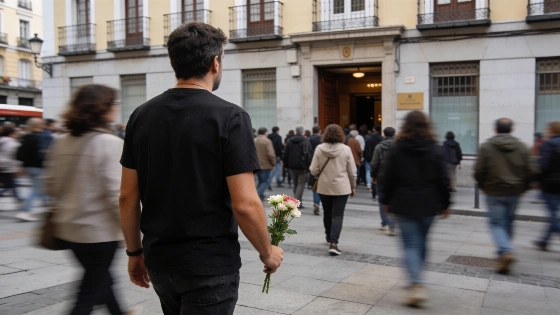
About 20,000 people joined a peaceful march organised by the Sindicato de Inquilinas. The route ran from the camp at Puerta del Sol to the flat where Abascal lived. Protesters called for the right to housing, giving a public dimension to the dispute that had already reached the courts through the earlier camp case.
Abascal had lived for more than 70 years in the flat on Alcalde Sáinz de Baranda street in Madrid’s Retiro district. The long tenancy became one of the defining details of the case after her eviction.
The memorial action moved beyond the march. The Sindicato de Inquilinas called for a minute of silence at 12:00 on Friday in workplaces and places of study across Spain. CCOO and UGT backed the initiative and urged workers to take part. Reports also described preparations for a 24-hour general strike focused on the housing crisis.
“Maricarmen ha conseguido que el debate de la vivienda vuelva a estar en el centro”, said Beatriz Duro, who represented Abascal as her lawyer. Her statement reflected the political reach of a case that began at one Madrid address and became a national argument over responsibility when an eviction is enforced.
EFE and CNN reported the eviction, the subsequent hospitalisation and Abascal’s death. Both noted that the specific medical cause had not been publicly disclosed.
During the reading of the manifesto, Alicia del Río, spokesperson for the Sindicato de Inquilinas, blamed speculators and what she described as rentier laws that allow such situations. She criticised governments that pass those laws or leave them unchanged. She also accused the judiciary of applying them instead of listening to human rights courts. Police came under attack because officers execute eviction orders. The union made these political accusations; they do not establish legal or medical responsibility for Abascal’s death.
On 28 September, representatives of Abascal and the owner, Urbagestión Desarrollo e Inversión SL, agreed that she could return to the flat after leaving hospital. She died before she was discharged and therefore never made it back home.
The timing has added political pressure. The week closes after the election call, while the left continues negotiating the Frente Amplio candidacy. Ada Colau is willing to lead it provided Podemos is included. Housing has therefore entered negotiations over the political alternative taking shape ahead of the vote.
A separate economic dispute now sits alongside the housing debate. The president of CEPYME opposed the proposal to raise the minimum wage by pointing to the difficulty of keeping businesses open. The source provides no further details of that response. Its inclusion places social demands alongside pressure on employers during the election period.
The case includes an eviction from a Madrid home on 23 September, hospitalisation at Gregorio Marañón and Abascal’s death on 7 October. The minute of silence extends the protest into workplaces and schools beyond Puerta del Sol. The manifesto identifies the actors blamed by the tenants’ union, while the agreement with Urbagestión shows that negotiations continued after the eviction. Political negotiations continue as those accusations remain in public view.
The available reporting does not establish a medical cause of death or assign responsibility to a particular landlord, court or police force.