Castilla y León is invoking Article 35.2 of Spain’s Organic Law 4/2000 on the rights and freedoms of foreigners as it considers possible agreements with countries of origin for unaccompanied foreign minors. Vox cites the provision as the legal basis for regional discussions. It contemplates cooperation to support minors’ care and social integration in their countries of origin, including possible family reunification and return with their parents. It also requires protection of the child’s best interests and monitoring by the competent autonomous administrations.
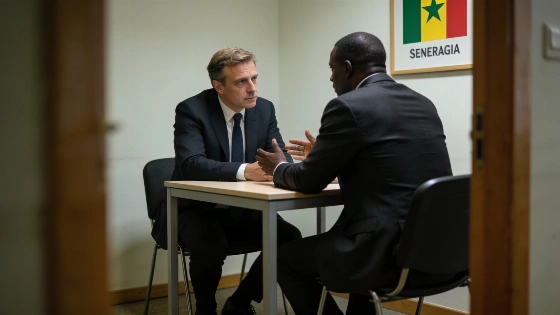
Vice-president Carlos Pollán met Senegal’s ambassador to Spain, Ibrahim Al Khalil Seck, at the embassy in Madrid on 28 October 2026. Pollán described the first meeting as productive and pleasant. He said both sides would continue examining what Spanish immigration law allows regional administrations to discuss with countries of origin. The participants agreed to stay in contact through the Senegalese embassy.
No return agreement was announced, and the meeting set no return procedure or implementation timetable. No number of affected children or families was announced. The talks remain exploratory, with no bilateral or regional agreement signed.
The meeting is part of a governing pact between Vox and the PP in Castilla y León, Aragón and Extremadura. In Castilla y León, a document signed on 3 June by Pollán and Junta president Alfonso Fernández Mañueco committed the regional government to promoting agreements with countries of origin. Point 10.2 links that work to identifying and locating families, then facilitating reunification where possible. Pollán had also presented the objective to the Cortes of Castilla y León’s Economy and Finance Commission.
Aragón’s vice-president, Alejandro Nolasco, attended. Eliseo Fernández, Extremadura’s director general for Social Services, Childhood and Family, was also present. The three regional representatives met with Seck to explore possible cooperation with Senegal.
The stated aim is to protect the best interests of the minors and establish monitoring mechanisms involving the autonomous communities. Pollán has described family tracing and identification as part of the effort to help reunification and, where appropriate, return. The Junta’s Consejería de Desregulación, Familia y Ayudas Sociales is examining possible agreements within the existing legal structure.
The proposed legal route concerns family reunification or return, not an automatic removal process. Article 35.2 does not itself set out an automatic return procedure or transfer full responsibility for international relations to regional governments. The initiative also raises questions about the limits of the autonomous communities’ powers in international relations. Vox argues that the article authorizes regional cooperation agreements with third countries.
The meeting also falls within the wider political debate over migration. A report on their immigration debate covered Gabriel Rufián and Irene Montero’s disagreement on the subject. Pollán and Seck agreed to stay in contact and continue working through the Senegalese embassy.