Fishermen in Gandia have collected 4,320 kilos of jellyfish from the coastline in July 2026 alone. The cleanups, organized with the city council, now stretch into December as warming seas and changing currents alter the Mediterranean’s rhythms.
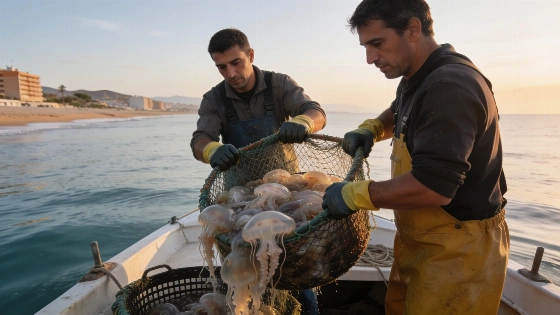
At dawn on the Gandia coast, Domingo Ciurana and Ramón Campillo set out aboard the Iceberg Uno, equipped with gloves, face shields, and a first-aid kit. Their mission: to intercept jellyfish before they reach the crowded beaches. In just one morning, they hauled in 600 kilos—part of a staggering 4,320 kilos collected during July 2026, as confirmed by the local fishermen’s guild.
The operation is part of a municipal agreement between Gandia’s city council and the fishing cofradía, designed to reduce jellyfish encounters for swimmers and support a shrinking local fleet. The fishermen work from 7:00 to 11:00, covering the stretch from Marenys de Rafalcaid to l’Auir, always about 500 meters offshore to avoid interfering with bathers. Using long-handled baskets, they scoop up the gelatinous creatures, which can still sting even after drying in the sun back at port.
Longer Season, Bigger Jellyfish
Ciurana and Campillo have noticed a shift: where jellyfish once disappeared by October, now they linger near Gandia until December, and some are larger than in previous years. Their observations echo a broader trend, though the Ministry for Ecological Transition notes that jellyfish abundance varies annually and depends on rainfall, winds, and currents. The ministry places peak jellyfish presence between spring and late summer, but recent years have seen the season stretch further, likely influenced by rising sea temperatures. In July 2026, Copernicus reported record-high ocean surface temperatures for the month outside the polar regions, while Spain’s AEMET forecasts a strong probability of above-average warmth through autumn.
Fewer Boats, Same Challenge
With fewer fishing boats available, the cofradía has reduced its jellyfish collection outings from four to two per week, focusing on weekends. Despite this, the total catch remains high, thanks to the dedication of those still participating. Carmen Argudo, president of the guild, acknowledges the growing difficulty in maintaining coverage as the fleet shrinks. The city’s support is crucial: in November 2025, Gandia approved a €26,500 direct subsidy for the cofradía, covering annual activities including jellyfish removal. While this figure is from last year, it highlights the ongoing commitment to keeping beaches safer and supporting local fishermen.
Impact on Fishing and Public Safety
Jellyfish swarms don’t just threaten swimmers—they complicate fishing itself. Nets become clogged, and some boats are forced to operate farther from shore to avoid entanglements with species like cuttlefish and gilt-head bream. The annual open-water swim from the port, scheduled for August 15, will avoid the breakwater this year after stings marred the previous edition. According to the Ministry for Ecological Transition, jellyfish can damage fishing gear and compete with commercial species for food, though natural predators like turtles and migratory fish help keep populations in check.
Authorities advise against entering the water during jellyfish blooms and recommend consulting lifeguards before swimming. Contact with dead jellyfish or fragments should be avoided, and stings should be treated with seawater and cold packs—not fresh water, ammonia, vinegar, or urine. Medical attention is advised for symptoms like dizziness, vomiting, or muscle cramps.
As Gandia’s fishermen adapt to changing conditions, their efforts mirror broader challenges facing Mediterranean communities. The story of adaptation and resilience is not unique—recently, a stag’s return to Linarejos after relocation also highlighted the unpredictable ways nature responds to human intervention.