A gas explosion during metro works in Sants left eight injured and sparked a towering blaze. Recent rail sinkholes in Sarrià-Sant Gervasi and Nou Barris add to public unease. Authorities urge calm as investigations continue.
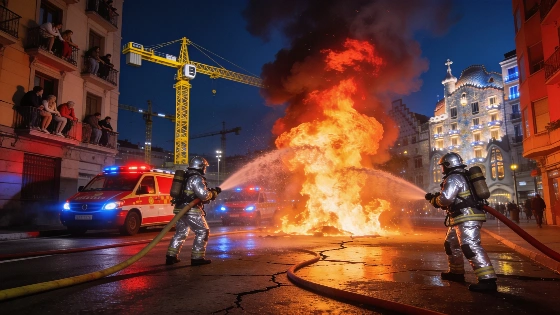
Barcelona is facing renewed questions about the safety of its public works after a gas explosion during metro construction in Sants left eight people injured, two of them seriously. The incident, which occurred on Wednesday, was triggered when a drilling machine accidentally pierced a gas pipe, turning the street into a scene of intense flames that lasted for more than 12 hours. The event unfolded just days before the anniversary of the 1992 Olympic Games, adding to the sense of unease in the city.
Emergency services responded quickly, but the complexity of the gas network made it impossible to simply shut off the supply. Firefighters worked through the night, using water jets to contain the blaze and deploying inflatable stoppers to seal four separate gas escape routes. Only after the final leak was blocked did the fire extinguish itself, ending a tense standoff that kept residents on edge. Many locals reported difficulty sleeping, with some describing flames reaching over ten meters high outside their homes.
The works at the Sants metro station are part of a major accessibility upgrade led by the Departament de Territori, with a budget of nearly 16 million euros and a timeline stretching into 2028. While the city council was forced to address public concerns, officials clarified that the project is managed at the regional level. On Thursday, Albert Batlle, Barcelona’s deputy mayor for security, called for full accountability from all responsible administrations and contractors.
Technical teams have insisted that the recent incidents are unrelated and coincidental, urging residents to trust in established safety protocols. Carles Vaccaro, head of civil works at Infraestructures.cat, addressed the media for the first time in his two-decade career, emphasizing that the gas explosion and the recent sinkholes affecting the L9 metro line in Sant Gervasi are distinct events. He also referenced a separate sinkhole in Vallbona, which falls under the responsibility of Adif, the national rail infrastructure operator.
These events have heightened public anxiety, especially as Barcelona has seen multiple infrastructure failures in a short period. The sinkholes in Sarrià-Sant Gervasi and Nou Barris have disrupted rail services and raised questions about the condition of underground networks. The city’s response has focused on transparency and technical explanations, but for many residents, the succession of incidents has eroded confidence in ongoing construction projects.
Similar concerns about gas safety and emergency response were highlighted in a previous case, where a gas explosion at the Plaça de Sants metro works also resulted in injuries and a prolonged fire, as detailed in coverage of the earlier Plaça de Sants incident. These repeated emergencies underline the challenges of managing complex urban infrastructure in a densely populated city.
Barcelona’s experience is not unique in Spain, where rapid urban development and aging networks often intersect. Gas leaks and construction-related accidents remain a persistent risk in major cities, prompting authorities to review safety measures and emergency protocols regularly. The incidents in Barcelona may lead to further scrutiny of how public works are planned and executed, especially in areas with dense underground utilities. For now, officials continue to stress that each event is being thoroughly investigated, and that public safety remains the top priority as the city moves forward with its ambitious infrastructure agenda.