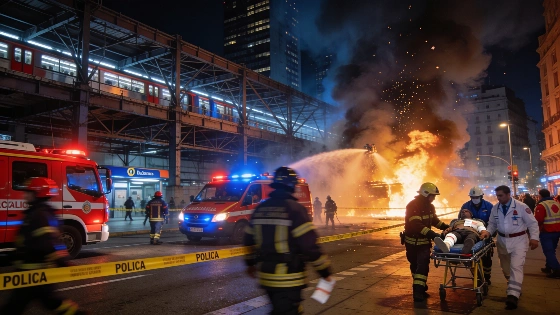
A gas explosion at the Plaça de Sants metro works in Barcelona left eight workers injured, two seriously. Emergency services battled a persistent fire and cordoned off the area. The incident disrupted transport and triggered a regional emergency alert.
A major gas explosion at the Plaça de Sants metro construction site in Barcelona late Wednesday night has left eight workers injured, including two in serious condition. The blast, which occurred at 22:50 during ongoing repairs to a damaged gas pipe, triggered a significant fire and forced a large-scale emergency response. The incident unfolded at the entrance to the L5 metro station, currently under renovation to improve accessibility.
Earlier in the day, at 14:40, construction workers detected a gas leak near the L5 Sants station. Initial efforts by nine Barcelona Fire Brigade units and gas company technicians appeared to contain the leak. However, while attempting to repair the affected pipe hours later, a sudden deflagration erupted, injuring all eight workers present—each of them male.
Emergency medical teams deployed eight ambulances and set up an advanced medical post at the scene. Two of the injured were classified as seriously hurt and, along with two others in less severe condition, were transported to Vall d’Hebron Hospital. Another worker with moderate injuries and three with minor injuries were taken to Hospital Clínic. The fire, fueled by accumulated gas, continued to burn for nearly two hours after the explosion and was expected to take several more hours to fully extinguish.
The Guardia Urbana cordoned off the area and closed traffic on Carrer de Sants, while Metro authorities shut only the Galileo street entrance. Both L1 and L5 metro lines remained operational, but Transports Metropolitans de Barcelona (TMB) warned that bus routes could be diverted if the fire persisted into Thursday morning. The regional emergency plan Procicat was activated at the pre-alert level in response to the incident.
Authorities have launched an investigation to determine the exact cause of the explosion, focusing on the impact of construction works on the gas infrastructure. The incident highlights ongoing challenges in managing urban infrastructure upgrades in densely populated areas. In a related context, recent reports have also drawn attention to the strain on public services in Spain’s major cities, such as the overwhelmed juvenile violence court in Madrid, underscoring the broader pressures facing emergency and municipal systems.
Gas-related incidents in Spain, while relatively rare, can have significant consequences in urban environments. Barcelona’s emergency services are trained for rapid response to such events, but the complexity of ongoing construction projects increases the risk of accidental damage to critical infrastructure. The city’s metro network, one of the busiest in Europe, is undergoing extensive modernization, with accessibility improvements and safety upgrades scheduled across multiple lines. The Plaça de Sants area is a key transport hub, making any disruption particularly impactful for commuters and local businesses. As investigations continue, authorities are expected to review safety protocols for construction near essential utilities to prevent similar incidents in the future.