Gibraltar will remove its border controls with Spain for the first time since 1908. The move promises easier movement for thousands of workers and new economic rules for businesses. Local authorities expect significant changes for both sides.
Gibraltar is preparing to dismantle its border controls with Spain, marking the end of a system that has shaped daily life for over a century. From 15 July, the longstanding checkpoint between the British Overseas Territory and La Línea de la Concepción will be removed, allowing unrestricted movement for residents, workers, and visitors. The change is the result of a complex agreement between the UK and the European Union, designed to address the unique challenges posed by Brexit for this small but strategically important region.
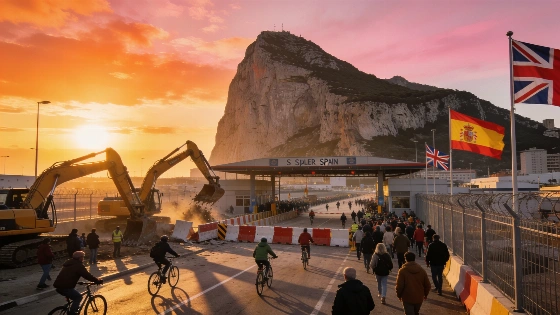
Each weekday, thousands of people cross the border for work, with up to 15,000 Spaniards commuting into Gibraltar. Until now, these crossings have been slowed by lengthy queues, especially during rush hours. Local residents and business owners have long described the border as an unnecessary barrier, with many in La Línea de la Concepción depending on Gibraltar for employment and trade. The mayor of La Línea, Juan Franco, has highlighted that a significant portion of local business income comes from Gibraltarian clients, underlining the economic interdependence of the two communities.
The new arrangement will see Gibraltar aligned with the European customs union and the Schengen free travel zone. This means that while movement between Spain and Gibraltar will become seamless, travelers arriving from outside Schengen, including the UK, will still face passport checks at Gibraltar’s airport and port. The Chief Minister of Gibraltar, Fabian Picardo, has described the agreement as a transformative step, promising a dramatic increase in the flow of people and goods. He expects local businesses to benefit from higher visitor numbers, no longer limited by border delays.
For Gibraltar, which boasts one of the world’s highest per capita incomes, the removal of the border is expected to boost economic activity. In contrast, La Línea de la Concepción and the surrounding Andalusian region face high unemployment rates, nearing 30%. Local officials hope that easier access will help address some of these disparities. The deal also introduces new rules: goods sold in Gibraltar must now comply with EU regulations, and a new transaction tax will replace import duties, starting at 15% and rising to 17%. Excise taxes on certain products will also increase, raising concerns among some business owners about competitiveness and administrative burdens.
Gibraltarians overwhelmingly opposed Brexit, with 96% voting to remain in the EU in 2016, largely due to fears over sovereignty disputes and the impact on cross-border trade. Years of negotiations have now produced a compromise that avoids a hard border, but also brings new regulatory requirements. Business leaders in Gibraltar have expressed cautious optimism, welcoming the end of uncertainty but noting the challenges of adapting to EU standards and new tax obligations.
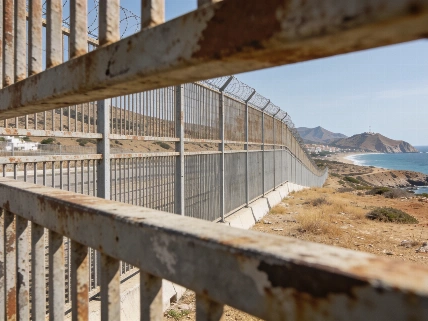
Preparations for the border’s removal have been visible in recent weeks, with machinery working nightly to dismantle the fence. The move recalls earlier moments of tension, such as the 13-year blockade imposed by Francisco Franco in 1969, which only ended in 1982. Now, both Spanish and Gibraltarian officials are presenting the new arrangement as a historic opening, reversing decades of division. The significance of this change is underscored by the fact that the border fence, first erected in 1908, has been a defining feature of the region for generations. As noted in a related report, the physical barrier’s demolition has already begun to reshape daily life for thousands on both sides of the frontier, as detailed in coverage of the fence’s removal.
Gibraltar’s unique position at the crossroads of Europe and Africa, and at the meeting point of the Atlantic and Mediterranean, has long made it a focal point for political and economic disputes. The latest agreement, pending final approval from the UK and European parliaments, is seen by local leaders as a chance to turn the page on decades of uncertainty. However, the practical effects—ranging from new customs checks for goods to changes in tax policy—will require adjustment from residents and businesses alike. The coming months will reveal how this new era of open borders will reshape the region’s economy and daily routines.
For context, Gibraltar covers just 6.8 square kilometers and is home to around 40,000 people. Its economy relies heavily on sectors such as shipping, online gaming, and financial services, while neighboring Spanish towns have historically depended on cross-border employment. The removal of the border is expected to facilitate not only daily commutes but also tourism and investment. However, the introduction of EU-aligned regulations and taxes may alter the competitive landscape for local businesses. The situation remains dynamic, with authorities on both sides monitoring the impact of these unprecedented changes.