The Gibraltar border fence, closed for 13 years under Franco, is being dismantled after six years of negotiations. Over 100,000 people on both sides will see daily life transformed as the last physical barrier disappears.
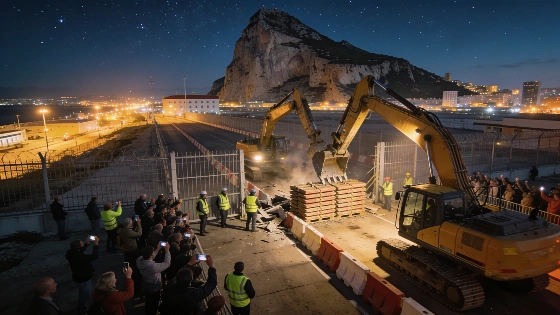
The demolition of the Gibraltar border fence marks a turning point for the 105,000 residents of Gibraltar and La Línea de la Concepción. After years of negotiations and decades of restrictions, the physical barrier that once separated families and economies is being removed, with the final works set to conclude at midnight on July 15. The move follows six years of talks between Spain, the UK, and Gibraltar, and comes after the symbolic announcement in 2020 that the fence would be “torn down.”
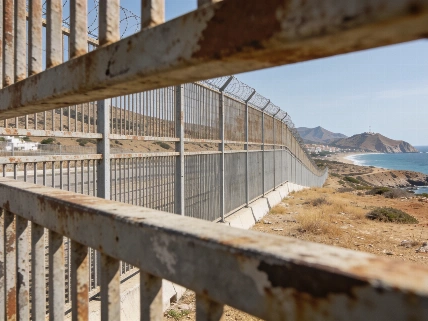
For many, the fence was more than a border—it was a daily obstacle. The original closure in 1969 under Franco’s regime forced families to take circuitous routes just to visit relatives living minutes away. The reopening in 1982 was a milestone, but the current demolition is seen as even more significant by those who lived through both moments. Juan Carmona, former mayor of La Línea, recalls the logistical and emotional challenges of the original reopening, noting that the current agreement is fundamentally different and more far-reaching.
Work on dismantling the fence, control booths, and canopies has accelerated in recent weeks, covering an area of about 30,000 square meters. Less than half of this space will become fully open, but the psychological impact is already evident. Many locals describe a lingering “cage syndrome,” a sense of confinement that is only now beginning to fade. The Spanish government’s decision to delay Prime Minister Pedro Sánchez’s visit to the site, due to the recent tragedy in Almería, underscores the national significance of the event.
The economic implications are substantial. Gibraltar’s economy relies heavily on the 15,622 cross-border workers, most of whom are Spanish. The end of double taxation for those earning under €60,000 annually is expected to inject around €30 million into La Línea’s economy, according to current mayor Juan Franco. The removal of the fence is also expected to boost employment and ease daily commutes, with record numbers of cross-border workers already reported in February.
For residents like Jose Luis Martínez, who has crossed the border daily for 13 years to work in Gibraltar’s tech sector, the change means less uncertainty and more opportunity. The only remaining variable will be traffic, not border controls. The new arrangement is reminiscent of the early 20th century, when movement between Gibraltar and La Línea was almost seamless.
However, challenges remain. Local authorities are seeking control over the newly available land for urban development, and concerns persist about rising housing costs—La Línea has seen a 20% increase in property prices over the past year. There are also unresolved issues regarding pensioners, which the current agreement does not address.
The transformation of the Gibraltar border comes in the wake of Brexit, which forced a shift in attitudes on both sides. The new treaty between the UK and the EU is seen as irreversible by local leaders, and Gibraltar’s removal from Spain’s tax haven list is expected to have lasting effects on the region’s economy. The story of the border’s evolution is deeply personal for many, including journalist Francisco Oliva, who chronicled his childhood experiences in "El niño de la Verja." His perspective highlights the long-term social and emotional costs of the barrier, as well as the hope that now accompanies its removal.
As the region prepares for this historic change, the focus is on practical outcomes: smoother commutes, economic growth, and the potential for new cross-border cooperation. The dismantling of the fence is not just a symbolic gesture—it is a concrete step toward integration and shared prosperity. In the context of recent national events, such as the deadly wildfire in Almería that claimed multiple lives and prompted a government response as reported here, the opening of the Gibraltar border stands out as a rare moment of optimism and forward movement for southern Spain.
Historically, the Gibraltar border has been a flashpoint in Spain-UK relations, with its status shifting in response to broader political changes. The current agreement, reached in Brussels, reflects a new era of cooperation. For the thousands who cross the border daily, the disappearance of the fence is expected to bring tangible improvements to work, family life, and the local economy. The coming weeks will reveal how quickly the region adapts to this unprecedented openness.