Gonzalo Suárez died at home in Madrid on September 29, 2026, aged 92. His restless career moved through cinema, literature, journalism and fantasy without accepting the usual rules of success.
On September 29, 2026, Gonzalo Suárez died at his home in Madrid. He was 92. Family sources and the Spanish Film Academy confirmed his death, according to Infobae and Telemadrid. Writer, filmmaker, screenwriter and journalist, Suárez moved between fields without settling into one label. His work brought humour, fantasy and the unstable line between reality and dreams into a cultural scene he saw as grey and rigid.
His career was built on reinvention.
Over the course of his career, Gonzalo Suárez directed more than 20 feature films, alongside his work as a writer, screenwriter, journalist and sports chronicler.
Suárez was born in Oviedo in 1934. For decades, he refused to keep literature and cinema in separate rooms. He wrote novels and scripts, directed films and created the alter ego Martín Girard around 1960 to publish sports chronicles. The invention showed his instinct for masks and shifting identities.
In his books and films, reality could bend into fiction. Characters moved between ordinary life and imagined worlds. The result was playful and mischievous, not simply experimental.
Cinema brought his widest recognition.
Remando al viento showed the scale of his ambition. It earned him the Goya for best director and the Silver Shell at the San Sebastián Film Festival in 1988. El detective y la muerte and La reina anónima also showed a filmmaker who preferred elegance and provocation to easy answers.
His films could be strange without losing precision. They could be literary without standing still. That independence also kept his career outside the faster celebrity cycle described in an earlier music report.
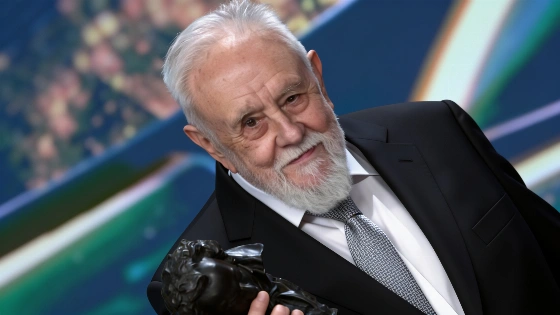
Before receiving the Goya de Honor in February 2026, Suárez had already received Spain's National Film Award in 1991 and the Gold Medal of Merit in the Fine Arts. The later honour was presented as recognition of a career spanning several decades and multiple artistic fields.
Suárez's final public appearance came in February 2026. The Spanish Film Academy presented him with the Goya de Honor and described him as a key figure in Spanish culture over the previous six decades.
At the ceremony, he called cinema the last place where people can dream while awake, even in an age of artificial intelligence and virtual realities. He connected that power to the first bison painted by human ancestors inside a cave. The image was not nostalgia. It defined his artistic position: cinema mattered because it turned an act of invention into a shared physical experience. Heraldo reported the statement as part of his last public appearance.
Suárez once described his career as one of luck rather than success. He also said he had learned not to arrive. The record tells a sharper story.
He arrived repeatedly in different forms. He refused to stay where audiences expected him. Spanish cinema and literature have lost a creator who never fit neatly into either field. That refusal became his method.