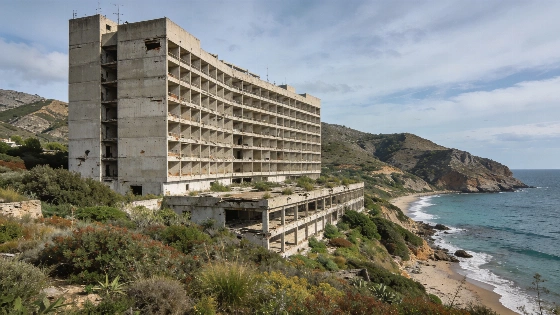
The fate of the illegal Algarrobico hotel in Almería is back with the Andalusian court. Authorities urge swift action after the local council delayed revoking the building permit. The demolition process remains stalled.
The future of the controversial Algarrobico hotel in the Cabo de Gata Natural Park has once again landed in the hands of the Tribunal Superior de Justicia de Andalucía (TSJA). Both the Ministry for Ecological Transition (Miteco) and the Junta de Andalucía are pressing the court to clear the way for demolition, following the Carboneras council's recent decision to postpone the annulment of the hotel's building permit. This move, supported by PSOE councillors, has reignited tensions over the fate of the structure, which has been declared illegal for years.
At the heart of the dispute is the council's failure to act on a 2021 TSJA ruling that required a formal review of the permit granted in 2003. Despite repeated ultimatums from the court, local authorities have consistently delayed compliance, citing procedural obstacles. The latest postponement came after a motion from a non-affiliated councillor, backed by a former PP member and the PSOE bloc, blocked the expected vote to revoke the permit. The PSOE councillors involved were expelled from the party the same day.
In response, Miteco has formally requested that the TSJA order the Carboneras council to convene a new session within 72 hours to annul the permit. Should the council fail to comply, the ministry wants the court itself to invalidate the license, invoking Article 108.1.a of the Law on Contentious-Administrative Jurisdiction. This legal route mirrors a petition already submitted by Greenpeace, and the Junta's legal team is now working on similar arguments.
The joint commission for Algarrobico, which includes representatives from both the national and regional governments, met online to coordinate their approach. The Junta continues to oppose the expropriation process initiated by the central government in 2023, preferring to focus on legal annulment of the permit. However, Miteco has not ruled out expropriation as a parallel strategy, emphasizing that all legal tools remain on the table to ensure the protected area is restored.
During the meeting, Junta officials requested updates on the expropriation process and the status of the protocol between the two administrations. Miteco reiterated that the expropriation procedure is ongoing and remains a viable option for reclaiming the site. The ministry stressed the need for rigorous legal analysis to guarantee a definitive and legally secure solution for Algarrobico.
The case has become a symbol of Spain's struggles with illegal coastal development and the complexities of enforcing environmental law. The 21-story hotel, built on protected land, has stood unfinished for nearly two decades, drawing national and international attention. The ongoing legal battle highlights the challenges of balancing local political interests with broader environmental commitments. For context, public disputes over controversial decisions have also shaped other high-profile cases in Spain, as seen when a recent conflict in Valle Salvaje drew widespread debate over local governance and accountability.
Spain's coastal protection laws have been strengthened in recent years, but the Algarrobico saga underscores the difficulties in reversing past planning decisions. The outcome of the TSJA's next move will be closely watched, as it could set a precedent for similar cases across the country. The demolition of the hotel remains on hold until the court acts, leaving the future of the site—and the credibility of environmental enforcement in Spain—uncertain.