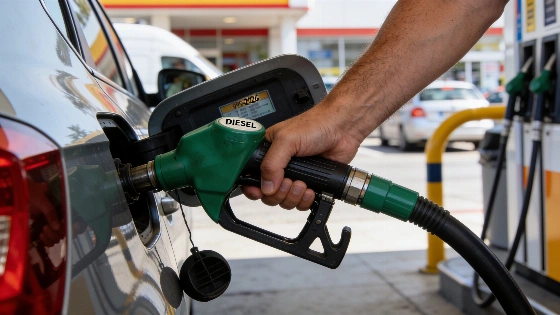
Spain will increase its diesel fuel subsidy to 20 cents per litre from September 1, 2026, in response to a sharp price spike. Gasoline aid, meanwhile, will drop to 5 cents as the government adjusts support to inflation trends.
From September 1, 2026, Spanish drivers will see a significant change at the pump: the government is raising its diesel subsidy to 20 cents per litre, a move triggered by a steep 15.7% year-on-year jump in diesel prices this July. The adjustment, confirmed by the Real Decreto-ley 18/2026, is designed to cushion the impact of inflation on households and businesses that rely on diesel vehicles.
About 20% of the world's oil supply passes through the Strait of Hormuz, making the region a critical flashpoint for global fuel prices.
The government’s approach is based on a sliding scale of support, with planned reductions in subsidies unless inflation spikes. The current discounts are set to expire on September 30, with no extension announced for October. This means that unless new measures are introduced, Spanish motorists could face the full brunt of global fuel price volatility as autumn begins.
One of the main drivers behind the surge in diesel prices is the ongoing conflict in the Strait of Hormuz, a critical maritime route between Iran and Oman through which about 20% of the world’s oil supply passes. Since hostilities erupted between the United States and Iran in late February, shipping disruptions and market uncertainty have pushed diesel prices to record highs, peaking at an average of €1.942 per litre on March 21, 2026, as noted by the International Energy Agency.
While the government’s intervention offers temporary relief, the broader outlook for fuel prices remains uncertain. The situation is further complicated by persistent tensions in global energy markets and the lack of a clear timeline for resolving the Hormuz crisis. For Spanish drivers, the coming weeks will be crucial in determining whether state support continues or if they must absorb future price hikes alone.
It’s worth noting that Spain’s vehicle fleet has faced other regulatory and economic pressures in recent years. For example, a recent analysis highlighted that while most vehicles passed the 2025 ITV inspection, emissions and lighting failures remained a concern for many owners—an issue that intersects with rising fuel costs and evolving environmental standards. More details on this can be found in the report on Spain’s 2025 ITV inspection outcomes.
As the government weighs its next steps, the effectiveness of targeted subsidies and the resilience of Spanish households to ongoing inflation will remain central questions for policymakers and the public alike.