The Spanish government reaffirms support for José Luis Rodríguez Zapatero despite mounting pressure over the Plus Ultra bailout. Internal PSOE unease grows as new testimonies implicate the former prime minister.
The Spanish government has reiterated its backing for José Luis Rodríguez Zapatero, even as internal tensions within the PSOE intensify following fresh accusations linking the former prime minister to the controversial €53 million rescue of Plus Ultra. The situation escalated after Julio Martínez, a key figure in the case, identified Zapatero as the person directing the bailout process, narrowing the room for maneuver for both the government and the party leadership.
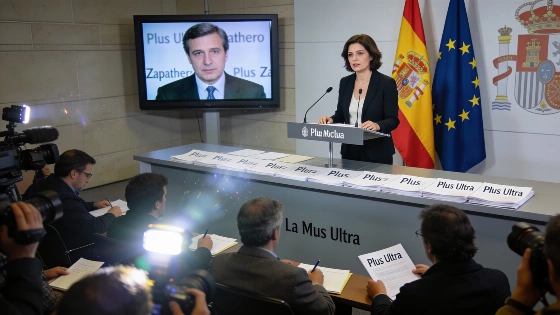
Government spokesperson Elma Saiz, following the latest cabinet meeting, emphasized that the administration continues to believe in Zapatero's innocence and upholds the presumption of innocence. Saiz placed particular stress on the legitimacy of the Plus Ultra rescue, noting that the process was handled and approved by SEPI technical services, reviewed by a Madrid court, examined by the European Commission, and audited by the Court of Auditors. She also recalled that the EU Court of Justice validated the aid scheme, insisting there is no doubt about the government's actions.
Despite these assurances, the political fallout has deepened. The administrator of Análisis Relevante, a consultancy central to the investigation, confirmed previous statements before Judge José Luis Calama, further complicating Zapatero's position. Since Zapatero was formally named as a suspect on May 19 for allegedly leading a structured influence-peddling network, the official stance from both La Moncloa and Ferraz has remained unchanged, with the PSOE leadership closing ranks around him.
María Jesús Montero, deputy secretary general of the PSOE and head of the party in Andalusia, attributed the latest accusations to the defense strategy of Martínez and Plus Ultra president Julio Martínez Sola, who have both implicated Zapatero in the airline's rescue negotiations. Zapatero, for his part, distanced himself from the aid during his testimony at the Audiencia Nacional last month. Montero pointed out that the accused have shifted their narrative, referencing the sentencing of José Luis Ábalos and the involvement of Víctor de Aldama, who was spared prison by the Supreme Court despite a four-year sentence, while others received much harsher penalties.
The potential downfall of Zapatero would be a severe blow for the government, given his prominent role in recent general election campaigns and in sensitive negotiations with Junts, including meetings with Carles Puigdemont in Switzerland. Senior government figures argue that the opposition, particularly PP and Vox, are using the case to undermine the executive, even as Spain continues to post record employment and economic growth figures.
However, discomfort within the PSOE is growing, especially among those further removed from the party's central leadership. Rafael Escuredo, the first president of the Junta de Andalucía, publicly lamented on social media the damage caused by the allegations, while some regional leaders privately demand explanations from Zapatero, describing the situation as one of "moral corruption." Publicly, most maintain a cautious tone, with Castilla y León's secretary general Carlos Martínez expressing continued trust in Zapatero but adding that anyone found guilty should face consequences.
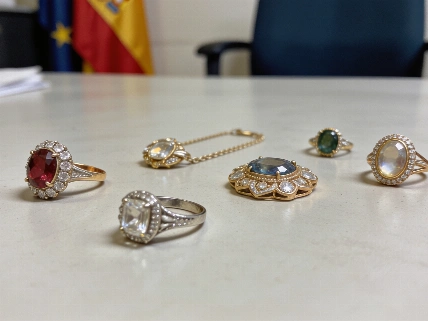
Frustration is mounting over Zapatero's silence regarding the origin of jewels valued at €1.3 million, which were found in his office safe. He requested a postponement of his statement on this matter after being charged with smuggling and tax offenses. Some party officials recall that the declared value of the items was initially much lower, and they remain dissatisfied with the lack of clarity about their provenance. The controversy is further fueled by contracts worth over €1 million between Whathefav S. L., a company owned by Zapatero's daughters, and consultancies linked to the Venezuelan Amaro Chacón brothers.
One federal PSOE board member described the current predicament as a "labyrinth with no exit," noting the increasing difficulty in distancing the party from Zapatero. The sense of frustration is compounded by the perception that the party is being dragged into the scandal, while most members remain silent in public.
In the broader context of Spanish politics, the Plus Ultra case has become a focal point for opposition attacks and internal party debate. The government's insistence on procedural correctness and the presumption of innocence reflects a strategy aimed at containing the fallout. Meanwhile, the case continues to attract national attention, much like other high-profile events such as the recent royal visit to Empúries, where Princess Leonor joined Girona Foundation youth at a historic archaeological site, underscoring the diverse challenges and stories shaping Spain's public agenda in 2026.
For context, the Plus Ultra bailout was part of a broader government effort to support strategic companies during the pandemic, with SEPI overseeing the allocation of funds. The ongoing judicial investigation is closely watched, as its outcome could have significant implications for both the PSOE's internal dynamics and the government's stability. The case also highlights the persistent scrutiny of public spending and the heightened sensitivity to allegations of corruption in Spanish politics.