After a relentless earthquake swarm in Granada, authorities in Spain are rushing to deliver financial support. More than 1,600 tremors have damaged homes and forced evacuations. Both regional and national governments are now competing to provide relief.
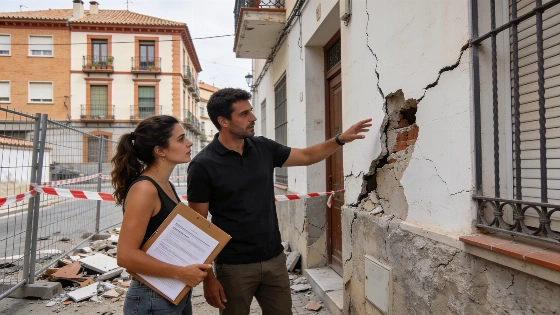
Spain’s central and Andalusian governments are scrambling to deliver emergency aid to Granada’s hardest-hit towns. Since mid-August, 1,693 earthquakes have shaken the province—150 strong enough for residents to feel. The repeated shocks have damaged homes, displaced families, and left entire communities demanding quick help.
The Junta de Andalucía was first to act, approving a seven million euro fund for affected towns under decree 277/2023. Announced after an early Council of Government meeting, the measure gives local authorities ten days to apply once it appears in the BOJA. The money, managed by the Consejería de Presidencia, is set aside for urgent repairs and temporary rehousing. Officials say this is only a first step. According to Europa Press, the decree covers not just individual quakes but the entire seismic series that began on August 14, 2026, affecting several municipalities across Granada.
By September 1–2, over 41,000 compensation claims had already been filed with the Consorcio de Compensación de Seguros, with total estimated damages exceeding 105 million euros.
President Moreno plans to visit Granada for the first time since the crisis began, promising a broader support package coordinated across several ministries. With municipal elections approaching, both regional and national leaders are eager to be seen delivering real help.
Meanwhile, the central government is preparing to declare Granada and its metropolitan area a zone gravely affected by a civil protection emergency. Delegate Pedro Fernández says the Ministry of the Interior’s proposal is ready, and the official designation should come within days. This status will unlock more subsidies from various ministries, especially for those without insurance. The process depends on the number and assessment of claims from residents and local councils. Europa Press reports that the new status is meant to supplement insurance payouts or provide aid to those not covered by the Consorcio de Compensación de Seguros.
Madrid has already mobilized 100 million euros through the insurance compensation consortium, sending 250 extra technical staff to speed up damage assessments and payouts. Vice President Carlos Cuerpo says this amount could increase if needed. Fernández also notes that people can still access permanent aid decrees, and some have already filed claims directly with the Spanish government.
The official logic for aid distribution now involves the regional government funding urgent municipal infrastructure repairs, while the central government prepares a nationwide 'heavily affected zone' declaration to expand support for private individuals and the uninsured.
The earthquake sequence, centered in Alhendín, has exposed how unprepared local systems are for natural disasters. The strongest shocks, reaching magnitude 4.8 on August 15 and 18, forced urgent evacuations in towns like La Zubia and Maracena. Hundreds of families now face daily needs for repairs, structural checks, and safe temporary housing. Telecinco reports that seismic activity continues, with more than twenty new tremors in Vega Sur on September 6, at least three of which were felt by residents.
This rush for visibility and credit among politicians is not unique to Granada. As reported earlier, regional and national authorities often clash over who leads in crisis response, especially when elections are near and public scrutiny is high.
What stands out in Granada is the speed with which both levels of government have announced—and competed over—aid packages. The overlapping promises and parallel funding may offer hope to residents, but they also reveal a familiar pattern: in Spain, disaster relief is often shaped by political rivalry as much as practical need. The real question is whether these millions will bring timely repairs and security for those still living with aftershocks, or if bureaucratic competition will slow the recovery Granada urgently needs.