The Guardia Civil demands access to tax records in the investigation of Isabel Díaz Ayuso’s partner. The judge’s refusal to release Hacienda data is seen as a major obstacle. The case centers on suspected bribery involving Quirónsalud executives.
The Guardia Civil has renewed its demand for access to tax records in the ongoing investigation involving the partner of Madrid regional president Isabel Díaz Ayuso. Officers from the Unidad Central Operativa (UCO) argue that the judge’s refusal to authorize the release of Hacienda data is hampering their ability to uncover potential undeclared financial flows and clarify the full scope of the alleged bribery case linked to the Quirónsalud group.
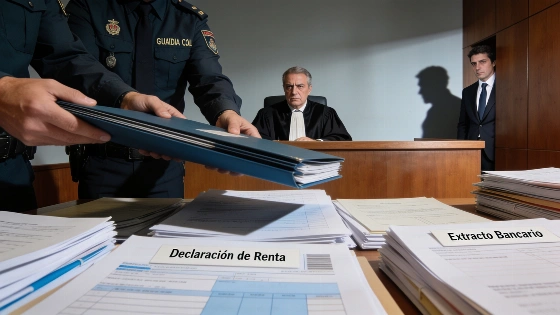
According to a judicial document dated June 17 and reported by Cadena SER, the UCO maintains that tax information is essential for cross-referencing with banking data. The agents stress that only by analyzing both sets of records together can they identify discrepancies, such as unreported income or financial movements that do not match official declarations. The investigation, which began with a request on December 19, sought permission to examine bank accounts, tax filings, and Social Security data. However, Judge Antonio Viejo authorized only the review of bank accounts, issuing the order on June 10—six months after the initial request.
The court’s decision allowed the UCO to track dozens of accounts across 16 banks, covering the finances of businessman Alberto González Amador, Quirónprevención president Fernando Camino, and Camino’s wife, pharmacist Gloria Carrasco. Despite this, the agents insist that the absence of tax data leaves critical gaps in the investigation, particularly in detecting undeclared transactions or inconsistencies between reported and actual financial activity.
This case is part of a broader pattern of judicial scrutiny involving high-profile figures and the Guardia Civil. Recent months have seen increased attention on the role of the UCO in sensitive investigations, as highlighted in coverage of internal probes and political pressure on law enforcement. For example, the government’s response to internal investigations within the Guardia Civil was recently examined in detail in a related report on the government’s stance regarding the director of the Guardia Civil.
In Spain, access to tax records in criminal investigations is tightly regulated, often requiring explicit judicial authorization. The current dispute underscores the tension between investigative needs and privacy protections, especially in cases involving public figures. The outcome of this legal standoff could set a precedent for future corruption probes, affecting how authorities balance transparency, due process, and the right to privacy. As the investigation continues, the UCO’s insistence on obtaining Hacienda data signals the importance placed on comprehensive financial analysis in complex corruption cases. The case remains open, with further developments expected as judicial authorities weigh the competing demands of law enforcement and legal safeguards.