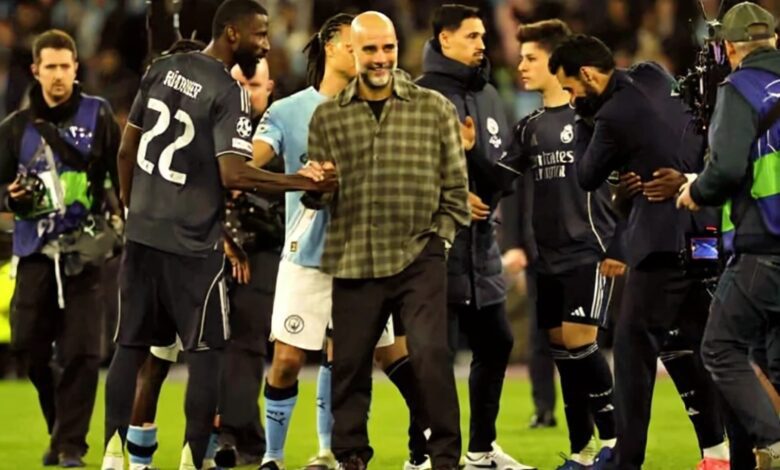
A football evening that was supposed to end with handshakes and well-wishes turned into an unexpected scene in front of thousands of spectators. After a tense match between Real Madrid and Manchester City, just as emotions on the field seemed to have settled, all attention was drawn to a confrontation between Antonio Rüdiger and Pep Guardiola. This episode not only sparked discussions among fans, but also highlighted how emotions can influence the behavior of even the most experienced figures in the football world.
In the center of the pitch, where a sense of respect usually prevails after the final whistle, Guardiola approached the Real Madrid players to shake their hands. Everything was going smoothly until it was Rüdiger’s turn. At that moment, a brief but clearly tense exchange took place between them. The look on the defender’s face made it clear he wasn’t happy with what was said, and his reaction did not go unnoticed by the coach or those around them.
Emotions at their limit
Pep Guardiola, known for his composure, chose an unusual way to respond: he smiled and blew several kisses in Rüdiger’s direction. The gesture surprised not only the player himself but also the other footballers watching the scene. Álvaro Arbeloa, who was nearby, tried to lead Rüdiger away to prevent the conflict from escalating and to avoid possible sanctions for the team’s key defender.
This moment sparked discussion among experts and fans, as such scenes are rare at this level. According to many, the Manchester City coach’s reaction showed just how intense the match was, despite the outward decorum of both sides. Even after the final whistle, emotions still ran high among the players, underlining just how much this encounter meant to both teams.
Consequences for the teams
Incidents like this can have long-term consequences in football. Any display of emotion on or off the field becomes a topic for debate in the media and among fans. In this case, according to russpain.com, the exchange between Rüdiger and Guardiola may affect future relations between the clubs, as well as influence player conduct in upcoming matches. It is possible this incident will spark new discussions about acceptable boundaries for emotion in professional sports.
Interestingly, such conflicts do not always end with disciplinary action, but they often become part of the rivalry’s history. Recalling other high-profile cases, even the most respected coaches and players are not immune to emotional outbursts. In practice, moments like these add intrigue and make football even more exciting for spectators.
Context and comparisons
The situation with Guardiola and Rüdiger is a reminder that even after the final whistle, tensions on the pitch don’t always subside. Looking back at recent events in Spanish football, it’s clear how unexpected developments can change the club’s atmosphere and influence what happens next. For example, the episode of Laporta’s election victory in Barcelona also sparked discussion and new expectations among fans and experts.
In such cases, it’s important not only what happens on the pitch, but also how the people involved react. Every gesture, every word can become the starting point for new stories that will be talked about long after the match ends. These are the moments that shape the unique atmosphere of football rivalries and make them unforgettable for everyone following the game.
Pep Guardiola is one of the most decorated and respected coaches of his era. His career spans successful stints at Barcelona, Bayern, and Manchester City. Known for his analytical approach and his ability to find creative solutions in difficult situations, Guardiola’s calm demeanor often conceals a capacity for passionate, headline-making actions. His working style and relationships with players frequently lead to surprising developments, fueling even greater interest in him and the teams he leads.