Spain lifts most orange heat warnings, except in Andalusia. Several eastern provinces now face severe storm and hail risks. Weather shifts bring new challenges for residents and authorities.
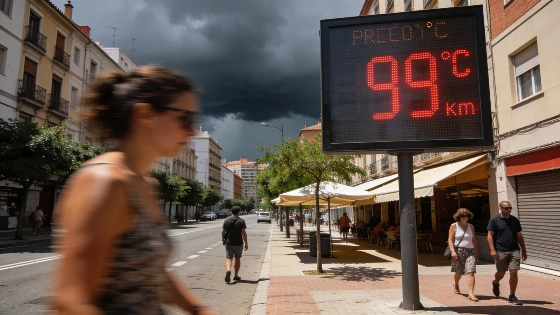
Spain enters August with a shift in weather risks: while most of the peninsula sees orange heat alerts lifted, Andalusia remains under high-temperature warnings, and several eastern provinces brace for intense storms and hail. The State Meteorological Agency (AEMET) forecasts that, despite a general drop in extreme heat, temperatures will still reach 35°C across much of the country, with peaks of 40–42°C expected in the Atlantic side of Andalusia. Meanwhile, the Pyrenees, Comunidad Valenciana, Albacete, and Murcia are on alert for strong showers, hail, and potentially damaging wind gusts.
Saturday’s forecast points to a complex weather pattern. Most regions will experience stable conditions, but Galicia and the western Cantabrian coast are set for cloudy skies and light, scattered rain, which should ease as the day progresses. In the eastern third of the peninsula, cooler Mediterranean air will bring a noticeable drop in temperatures, while low clouds are expected in the Strait of Gibraltar, western Alborán, and parts of the north and Mediterranean coast. The development of storm clouds in the east could trigger severe downpours, hail, and strong winds, especially in the eastern Pyrenees, the lower Ebro area, Murcia, Albacete, and Comunidad Valenciana, where localised severe events are possible.
Morning fog is likely in the Balearic Islands and northern Spain, with coastal mist in the Strait and Alborán, and dust haze in southern regions. The Canary Islands will see intervals of low cloud in the north and clearer skies in the south, with temperatures above 35°C and moderate winds carrying Saharan dust.
Maximum temperatures are expected to rise slightly in most areas, particularly in the north and northwest, except for the eastern third and northern Balearics, where they will fall. Large parts of the peninsula and the Balearics will remain above 35°C, with the highest readings in Andalusia’s Atlantic side and the Genil basin. Minimum temperatures will also climb, except in the northeast, where they will drop. Tropical nights are forecast for southern Spain, the northeast depressions, and the Mediterranean, with some areas in Andalusia, Murcia, and the Canaries not cooling below 25°C. Winds will be moderate on the Asturias and Galicia coasts, light elsewhere but strengthening in central and southern Spain later in the day, with prevailing northerlies in the Cantabrian, southerlies and easterlies in the Balearics and eastern Spain, and westerlies elsewhere.
Regional forecasts highlight the diversity of conditions. Galicia and Asturias expect cloudy skies and light rain, especially in the north, with fog in higher areas. Cantabria and the Basque Country will see similar patterns, with the Basque northwest likely to get scattered showers. Castilla y León, Navarra, and La Rioja will mostly have clear skies, though mountain areas may see some cloud development and isolated showers. Aragón and Catalonia face the risk of afternoon storms, particularly in the Pyrenees and southern Tarragona, with dust haze present. Extremadura and Madrid will remain mostly clear, but Madrid’s south and centre could reach 38–39°C. Castilla-La Mancha, especially Albacete, is at risk of strong storms with hail and wind gusts, while the interior valleys could see highs of 38°C. The Comunidad Valenciana and Murcia are on alert for severe storms, hail, and strong winds, especially inland. The Balearic Islands will have tropical nights and some morning fog, while Andalusia faces continued heat and the possibility of storms in eastern mountain areas. The Canary Islands will experience high temperatures, dust haze, and strong winds in exposed areas.
Recent weather events in eastern Spain have already shown the potential for severe hail, as seen when a powerful storm hit the interior of Valencia, causing significant disruption to crops and infrastructure. For more on the impact of such storms, see this report on recent hail damage in Valencia’s rural areas.
Spain’s varied geography means weather risks can shift rapidly between regions. The combination of lingering heat in the south and storm threats in the east highlights the need for local authorities and residents to stay alert. AEMET’s regional warnings are updated frequently, reflecting the dynamic nature of summer weather. For those in affected areas, especially in Andalusia, Comunidad Valenciana, Murcia, and Albacete, the coming days will require close attention to official advisories and preparedness for both heat and sudden storms. The persistence of tropical nights in many regions also raises concerns for vulnerable populations, as high overnight temperatures can impact health and comfort. The presence of Saharan dust in the south and Canaries may further affect air quality, adding another layer of complexity to the current weather situation.