Galician farmers are battling soaring temperatures that cut milk yields, cause miscarriages, and harm animal health. Urgent investments in cooling systems are now essential to keep livestock productive and farms economically viable.
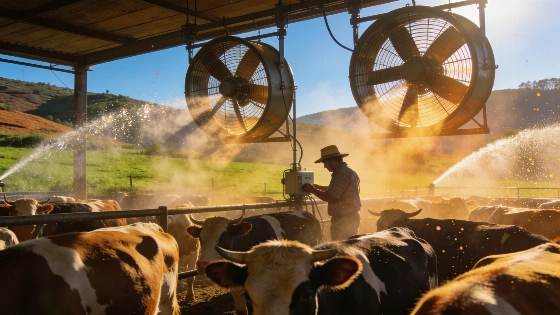
At Granja Bouzas in Lugo, the installation of industrial fans and water misters has become a matter of survival for its 110 dairy cows. Owner Miguel Bouzas recalls how, before these upgrades, heatwaves could slash daily milk output by up to 440 liters, a loss that quickly eroded the farm’s bottom line. Now, as Galicia faces hotter summers, such investments are no longer rare exceptions but a new standard for the region’s livestock sector.
Galician farms, once able to rely on mild Atlantic weather, are being forced to adapt as temperatures regularly climb above 26°C—the threshold where cows and hens begin to suffer heat stress. For dairy producers, the consequences are immediate: on the hottest days, milk yields can drop by as much as eight liters per cow. But the impact goes beyond production. Vets like Mery González from Seragro warn that heat stress disrupts fertility, delays lactation, and increases the risk of lameness and miscarriages, all of which drive up costs and threaten farm viability.
Cooling Becomes Essential
To counter these risks, more Galician farmers are investing in powerful ventilation, misting systems, and even mobile walls for poultry houses to boost airflow. According to Luis Vizcaíno, manager at Electrosarria, demand for farm cooling solutions has surged by 200% in just five years. These systems can lower barn temperatures by up to eight degrees—a critical difference when uncooled sheds can exceed 50°C during heatwaves.
For many, these upgrades are no longer optional. As climate patterns shift, the cost of inaction is measured not just in lost production but in animal welfare and the long-term sustainability of rural livelihoods. The urgency echoes broader challenges facing Spain’s countryside, where adaptation is key to survival. Stories like that of Fernando, who remains the only resident of his village after years of rural decline, highlight the pressures reshaping agricultural life across the country. (Read about the realities of rural survival in Spain.)
Poultry Farms Adapt Too
The crisis is not limited to cattle. Poultry producers are also reengineering their facilities, adding movable walls and advanced ventilation to protect hens from overheating. The shift is driven by necessity: without intervention, animal stress leads to lower egg production, higher mortality, and mounting economic losses.
As Galicia’s farmers confront a climate that no longer fits old expectations, the rapid adoption of cooling technology marks a turning point. Protecting livestock from extreme heat is now a prerequisite for staying in business, not just an upgrade for the future.