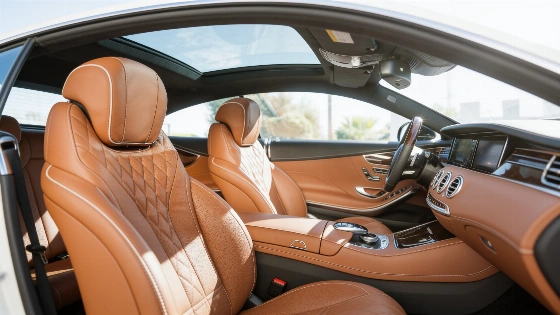
Nearly half of American consumers planning to buy a new vehicle within three years named heated seats as a desired feature, information from AutoPacific’s survey of about 19,000 prospective buyers. The reported figure was 47%, putting the comfort feature at the top of the list and suggesting convenience has become a prominent part of new-car shopping.
AutoPacific’s reported year-over-year ranking marks a sharp change: heated seats did not appear among its 15 leading features a year earlier, while performance and all-wheel lead had traditionally featured prominently on buyer wish lists. Once associated mainly with luxury models, heated seats have become more common across vehicle segments. The article’s cited estimate puts the added cost at less than €200. Comfort and all-wheel lead answer different needs: one warms occupants, while the other can affect traction and vehicle dynamics.
Other features near the top of AutoPacific’s reported list included front and rear parking sensors, at 45%; automatic emergency braking when reversing, at 44%; power-adjustable driver’s seats, at 43%; and lane-keeping assistance, also at 43%. The ranking also places large-animal detection, dashboard cameras, wireless charging pads and power-adjustable passenger seats ahead of all-wheel lead. These figures reflect what respondents said they wanted, not how a particular system performs on the road.
That distinction matters for driver-assistance technology. The National Highway Traffic Safety Administration’s New Car Assessment Program evaluates safety features through defined performance assessments. These include automatic emergency braking, pedestrian braking, lane-keeping assistance, blind-spot warning and blind-spot intervention. A feature’s presence alone does not establish that different systems perform equally. The survey’s reversing-braking result measures buyer preference, separate from a safety rating or federal equipment requirement.
AutoPacific’s reported findings also vary by the type of vehicle respondents are considering. Shoppers interested in electric vehicles or plug-in hybrids tend to prioritize battery range and fast charging. Those preferences concern different aspects of ownership: stated range depends on the vehicle and the test cycle used, while charging time can vary with charger power, battery temperature and the vehicle’s charging curve.
The results point to growing interest in comfort and convenience alongside safety technology. They do not show that one feature can replace another. Automakers have increasingly offered amenities once associated with luxury models in mainstream vehicles, while developing braking, lane-support and blind-spot systems assessed for their capabilities as well as their availability.
The automotive sector has seen other major shifts in recent months. For example, debate over the future of iconic brands and their ownership structures continues to make headlines, as seen in the recent clash between Volkswagen and Italian investors over Ducati. These developments show consumer preferences and industry strategies developing in parallel.
As manufacturers respond to changing buyer priorities, comfort and safety technology are likely to remain basic to new-car decisions. In AutoPacific’s reported survey, heated seats emerged as the most desired feature, an unexpected marker of what prospective buyers value in their next vehicle.