A University of Barcelona study links higher progesterone levels to less distinct brain responses to emotional situations. The finding could lead to more tailored assessments of hormone-related mood disorders.
Higher progesterone levels may make the brain respond in much the same way to emotionally simple and complex situations. That is the main finding of a University of Barcelona study of 116 healthy young women with natural menstrual cycles. None used hormonal contraceptives.
The study was published in Psychological Medicine by Cambridge University Press. It identified a change in the lateral frontal pole, a brain area involved in emotional control.
Emotional regulation depends partly on the brain's ability to tell situations apart. When that precision weakens, everyday emotions may be harder to process clearly. The study does not prove a direct cause and effect from one measurement. It does point to a specific biological signal that may help explain why some women experience changes in emotional wellbeing during the menstrual cycle.
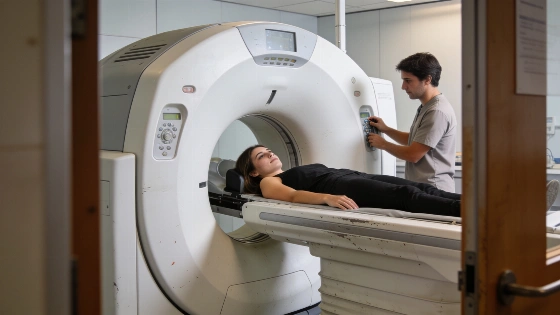
The researchers measured hormone levels in saliva, used MRI brain scans and applied multivoxel decoding to compare neural activity patterns across emotionally different situations.
Researchers led by Macià Buades at the Faculty of Psychology of the UB found that activity in the lateral frontal pole became more alike across stimuli with different levels of emotional complexity as progesterone rose.
In plain terms, the brain seemed less able to change its response when the situation became more demanding. This is different from simply recording a mood change. The study found a pattern of brain activity tied to emotional processing.
The hormone did not affect every part of the picture in the same way.
The researchers found no equivalent effect for estradiol. That does not prove estradiol has no influence on the brain. Rosamunde Hendricks, a UAB researcher and co-author of the study, said estradiol is harder to measure accurately in saliva. The method may have missed an effect that is present rather than showing that no effect exists.
The association also extended to self-reported wellbeing: according to the study’s independent coverage by Mirage News, women whose brains more clearly distinguished emotional complexity reported better mood during the previous week. This links the neural pattern to a measure of recent mood, while still not proving that progesterone directly caused the change.
The study therefore links progesterone to a measurable drop in the difference between emotional situations. The estradiol result is less certain because of the limits of the measurement. The findings add evidence about progesterone without settling how estradiol may act in the brain.
The possible medical value is in assessing people more individually, not in offering one explanation for all menstrual mood changes. Macià Buades argues that a clearer distinction between emotional situations could help people regulate their emotions in daily life.
That idea may matter when clinicians assess hormone-linked mood disorders such as premenstrual dysphoric disorder (PMDD). PMDD is marked by severe mood changes before menstruation.
The finding also fits a wider health issue: symptoms can disrupt daily life without being recognised quickly. An earlier health report on restless legs syndrome described how a neurological condition can go undiagnosed while disrupting sleep and rest. The conditions are different, but the practical point is similar. Effects on daily life need to be considered alongside biological measurements.
For now, the evidence supports a careful conclusion. Higher progesterone is associated with altered activity in a brain region involved in emotional control. It is also linked to a weaker distinction between emotional situations with different levels of complexity.
The study does not show that every premenstrual mood change is caused directly by hormones. It also does not rule out a role for estradiol. Its contribution is narrower and more useful: assessments of hormone-related emotional disorders may need to account for changes in how the brain reads emotional demands.
The results are most directly relevant to young healthy women with natural menstrual cycles who are not using hormonal contraception. Applying them to other groups will require care. The UB research offers a step toward more personalised assessment without turning one study into a complete explanation of the menstrual cycle.