A new book examines the Canal del Gran Prior, a major Enlightenment-era hydraulic project. The work, presented in Alcázar de San Juan, highlights the region's unique historical heritage and its ties to architect Juan de Villanueva.
A detailed study of one of Spain's most ambitious Enlightenment-era hydraulic projects has been published and presented in Alcázar de San Juan. The book, ‘El Canal del Gran Priorato de San Juan’, authored by Bernardo Sevillano Martín, delves into the origins, construction, and historical significance of the Canal del Gran Prior, a project that shaped the landscape and economy of La Mancha for decades.
The presentation took place at the Museo Casa del Hidalgo, drawing attention from local authorities and cultural advocates. Cristina Perea, the town's councillor for culture, joined Sevillano at the event, underlining the municipality's commitment to preserving and promoting lesser-known aspects of regional heritage. The book, based on Sevillano's doctoral thesis, was published by the University of Córdoba in collaboration with the Alcázar de San Juan City Council, reflecting a joint effort to support historical research and cultural dissemination.
Sevillano's research reconstructs the nearly thirty-year construction process of the canal, which spanned from 1782 to 1811 under the direction of renowned architect Juan de Villanueva. The study examines the motivations behind the project, its intended goals within the context of the Spanish Enlightenment, and the challenges that shaped its development. Through extensive archival work, the book addresses questions about the canal's effectiveness, its impact on the surrounding territory, and its connection to other initiatives around the Real Sitio de Ruidera.
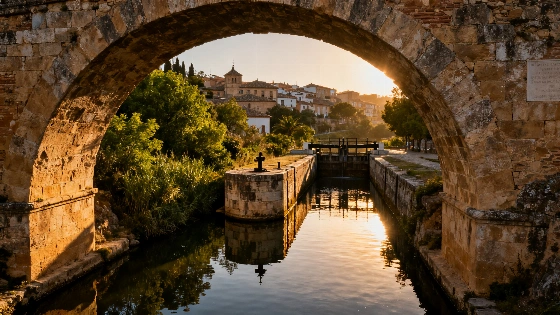
Alcázar de San Juan's special link to the canal is highlighted by the preservation of key remnants, such as the bridges at Alameda de Cervera and the Villacentenos lock. These structures are considered essential for understanding the scale and ambition of a project designed to transform the region's economy and society. Sevillano emphasized the importance of recognizing these remains, not only for their historical value but also for their association with Juan de Villanueva, a leading figure in Spanish neoclassical architecture.
During the event, Cristina Perea described the publication as a valuable tool for deepening local historical knowledge and making the region's heritage more accessible to the public. She referenced recent restoration efforts and reaffirmed the municipality's intention to continue investing in the conservation and promotion of these sites. The collaboration between the University of Córdoba and the city council was also noted as key to bringing the project to fruition.
The book is available at presentation events, through the University of Córdoba's publishing website, and on various online platforms, making it accessible to researchers and readers interested in the Canal del Gran Prior and the Enlightenment heritage of Alcázar de San Juan and its surroundings.
The Canal del Gran Prior was one of several large-scale hydraulic projects initiated in Spain during the late 18th and early 19th centuries, reflecting the era's drive for modernization and economic development. Juan de Villanueva, best known for designing Madrid's Prado Museum, played a central role in shaping the country's architectural landscape. The preservation of canal structures in Alcázar de San Juan offers a rare glimpse into the technical and social ambitions of the Spanish Enlightenment, and ongoing research continues to shed light on their broader historical context.