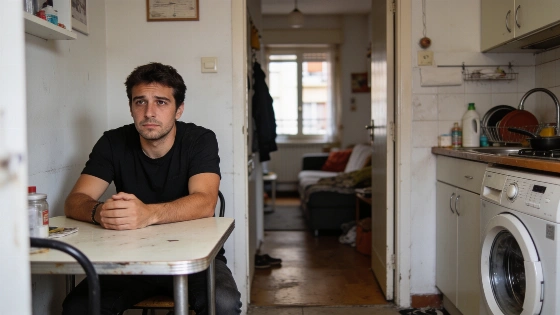
Up to 770,000 Spaniards are left financially vulnerable after paying rent or a mortgage, information from Oxfam Intermón. Economic journalist José María Camarero says one in three families cannot cover an unexpected cost.
A broken washing machine or a car repair can show how little money remains after housing costs, information from figures cited by economic journalist José María Camarero. He says up to 770,000 Spaniards are left financially vulnerable after paying rent or a mortgage, despite having jobs and regular wages.
The figure comes from a report by Oxfam Intermón. Camarero discussed its findings in the «Economía de Bolsillo» section of «La Tarde de COPE» with Pilar Cisneros. His account points to a gap between employment and household security: a steady salary may still leave too little to cover an ordinary emergency.
One in three Spanish families cannot meet an unexpected expense, he said. The examples are routine household problems, such as replacing a broken fridge or repairing a car. Record employment does not show how much income remains after housing is paid for.
The strain becomes severe when rent or mortgage payments take more than about a third of a household’s income. The Banco de España and the European Basic Bank recommend staying below that level. Families still have to cover everyday costs and credit payments. An unexpected bill can push an already tight budget further out of balance.
Buying a home has also become harder. Camarero cited INE figures showing that Spaniards are now asking banks for an average mortgage of €181,000, up from €150,000. He said monthly repayments can reach €800 to €900, bringing them close to rents in pressured areas. INE’s “Indicadores Urbanos” edition for 2026, published on 21 October, reported that Calvià had Spain’s highest average home-sale price in 2025, at €981,485.
For Gaspar, who shares a 40-square-metre flat in Madrid’s Cuatro Caminos district, the numbers are immediate. The home costs €1,200 between two tenants. He earns €1,400 in 14 payments, while fixed housing costs and utilities exceed €750. Saving about €100 a month means cutting back heavily on plans.
Glendys Cordero, a single mother of two in Jávea, previously paid €1,150 and sublet rooms after falling into financial difficulty. She now pays €750 for a flat. Her concierge salary is €1,371, leaving rent at more than 54% of her income.
Camarero says people in similar situations increasingly turn to small loans to pay for everyday purchases. Housing costs leave both tenants with little room to save or cover an unexpected bill.