Roughly 500 metres from Congress, tents have become part of Spain's housing fight. The Government defended two decrees as the PP confirmed it would vote against them.
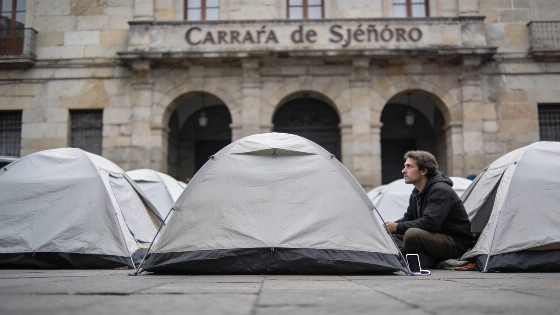
Roughly 500 metres from the Carrera de San Jerónimo, dozens of tents stood in protest against property speculation. Friday's vote in Congress will decide whether the Government's housing decrees move forward. The PP confirmed that its group would reject both measures. According to Euronews, the Spanish Government approved the package on 29 September. Congress must ratify it at the extraordinary session scheduled for 2 October.
The vote is the Government's clearest parliamentary test yet on a package affecting tenants and landlords. Housing Minister Isabel Rodríguez said the Government would address PP voters before the session. Her message was direct: PP MPs, she argued, were supporting the possibility of evictions. The opposition answered with its own figure. CASA47's website lists 678 homes, while Pedro Sánchez had promised 183,000 protected homes.
Rodríguez has described the package as a response to what she calls the country's main problem. The decrees cover evictions, speculation, short-term rentals and room rentals.
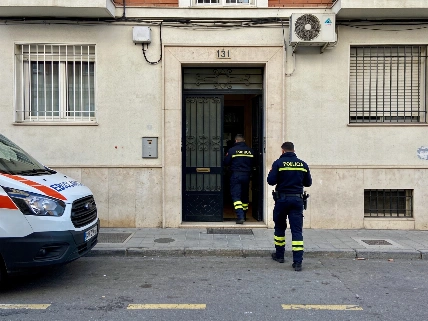
The measures followed the public outcry over the eviction of 87-year-old Maricarmen Abascal in Madrid, an episode that helped trigger protests and intensified pressure on the Government.
Those figures sharpened the clash. Eduardo Carazo told Rodríguez that the Government was better at building narratives than homes. The minister replied that the PP should state its position on the decrees instead of avoiding the housing crisis.
The package would extend rental contracts expiring by the end of 2028 for two years. It would also keep eviction protection for vulnerable tenants until 2030. Another measure would restrict so-called vulture funds from buying housing.
The reason is political.
For two months, turmoil in Ceuta had pushed the Government onto the defensive. Housing changed the mood in Congress. It gave the executive a subject it could defend instead of answering only attacks over the autonomous city and corruption. The Government has also linked the decrees to more affordable housing and steps to curb speculative investment.
The PP did not openly confront the activists in the camp. Cayetana Álvarez de Toledo was the exception. She used the phrase 15 meme and accused the Government of mobilising a crowd against property ownership. Vox went further. Its spokesperson Pepa Millán called the people camped in Puerta del Sol left-wing militias.
The package is wider than eviction protection: it also proposes rules for short-term and room rentals, tax measures against speculative schemes, incentives for landlords renting to low-income tenants and preferential loans for families buying their first home. The decrees are not guaranteed to survive the parliamentary procedure because the Government lacks a secure majority and Junts has not committed its support.
The tone was more restrained than the week before. The session followed the dispute over Ana Vázquez's pepper spray canister. It lasted more than 90 minutes without a single insult. The political exchanges stayed sharp.
Ester Muñoz opened the sitting with a focus on Ceuta. She demanded a Government response to the rape of a 17-year-old Moroccan girl. She described the alleged attackers as two invaders. Carlos Cuerpo criticised her for discussing the city without having visited it.
Ceuta and corruption remained the PP's main themes. Housing often appeared as a weapon in the coalition's internal disputes.
The divisions showed elsewhere too. Marta Madrenas of Junts attacked what she called Government chaos and improvisation. She did not debate the measures in detail. Maribel Vaquero of the PNV asked politicians not to treat vulture funds and small landlords as the same. Ione Belarra accused the Government of splitting the package into two decrees and demanded that the full text be brought forward.
The Spanish Government has separately argued that seasonal and room rentals must be regulated to close loopholes in the existing framework.
The argument also connects with the earlier housing dispute, where the decree exposed a contradiction between criticism of an eviction and opposition to the protection behind it.
Cuerpo invited the groups involved to support the Government. That appeal faces the PP's declared rejection. Coalition partners and other parliamentary groups are also demanding changes or a complete package.
Reuters reported that the uncertainty centres particularly on Junts. The decrees could fail to secure ratification within the constitutional deadline.
Housing changed the day's agenda. It also forced each major bloc to show its position on evictions, protected housing, landlords and public promises.
The Government now has the subject it wanted. CASA47's list of 678 homes gives the opposition a concrete answer to its promises. The vote will test whether the decrees can survive demands from the PP, Junts, the PNV and Podemos.