Spain faces a growing gap between new households and available homes. Construction lags far behind demand, driving up both purchase and rental prices. Key regions feel the strain as young adults struggle to move out.
Spain’s housing market is under strain as new households form much faster than new homes are built. This gap is pushing both property prices and rents to new highs, especially in the country’s largest cities.
Economist Gonzalo Bernardos warns that buying or renting in Spain is getting harder. The main problem: household formation is outpacing the supply of new homes. In 2025, Spain added about 241,000 new households, but only 91,900 new homes were finished. That leaves a shortfall of nearly 149,000 homes in just one year—more than 2.6 new households for every completed dwelling.
According to Fotocasa, in the first half of 2026, only 14% of people searching for housing in Spain were looking to rent, marking a historic low for rental demand share.
This isn’t just a statistical blip. The Bank of Spain’s latest annual report estimates a further deficit of around 150,000 homes for 2025 and a total gap of 750,000 units since 2021. The problem is most severe in six provinces—Madrid, Barcelona, Alicante, Valencia, Murcia, and Málaga—which together account for over half the national shortfall.
Prices are rising quickly. The National Statistics Institute’s Housing Price Index ended 2025 up 12.9% from the previous year. Second-hand homes rose 13.1%, and new builds went up 11.2%. Rents are also climbing, with new lease contracts up nearly 5% in real terms over the year. For many young adults, moving out is becoming less realistic: in 2025, 44.3% of Spaniards aged 26 to 34 still lived with their parents, and nearly half said unaffordable housing was the main reason.
Demographics are shifting, too. Spain’s average household size is shrinking—from 2.50 people per home in 2024 to a projected 2.32 by 2039. The number of single-person households is expected to jump by 42% over the same period. Even with only modest population growth, demand for separate homes is rising faster, driven by separations, aging, emancipation, and immigration.
The National Statistics Institute (INE) confirmed a new peak in housing prices in the second quarter of 2026, with a 12.2% year-on-year increase. This surge is especially pronounced in the secondary market, where prices rose by 12.9%, while new builds saw a 7.4% increase.
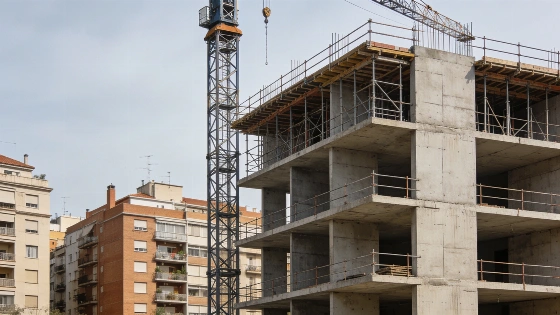
The construction sector is growing in economic terms, but not enough new homes are being built. In 2025, construction made up 5.35% of Spain’s GDP, higher than in recent years but still only half its share before the 2008 crisis. Much of this activity is focused on civil works, renovations, and non-residential projects, not on new housing where it’s needed most.
Several obstacles slow down new construction: a shortage of ready-to-build land, slow urban planning, long permit processes, and a lack of skilled workers. Even when building speeds up, the time between planning and completion means today’s demand won’t be met for years. The Bank of Spain notes that higher prices alone aren’t enough to trigger a quick supply response.
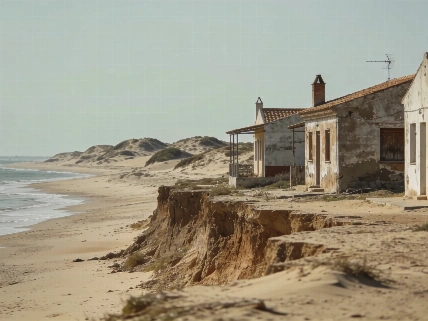
Location adds another layer of difficulty. Spain still has about 450,000 unsold new homes left from the last property boom, but many are in areas with little demand or don’t fit what buyers want. A vacant home in a shrinking town doesn’t help renters in Madrid or Málaga. As recent reporting shows, mismatches between available housing and real demand can leave vulnerable groups in poor conditions, even as empty homes sit unused elsewhere.
For policymakers, the challenge is clear: Spain can’t repeat the mistakes of the pre-2008 building boom, but it also can’t ignore the urgent need for more homes in the right places. Having millions of dwellings isn’t enough if they aren’t where people want to live. Until the supply gap closes, prices will stay high and many will struggle to find housing. Scarcity, not abundance, is setting the rules—and the cost of inaction is measured in lost opportunities for a generation.