In Nava del Rey, Valladolid, foreign seasonal workers are packed into unsafe, overcrowded housing and endure harsh working conditions. Local mafias and landowners profit, while authorities struggle to intervene. Tensions rise as the town’s population shrinks.
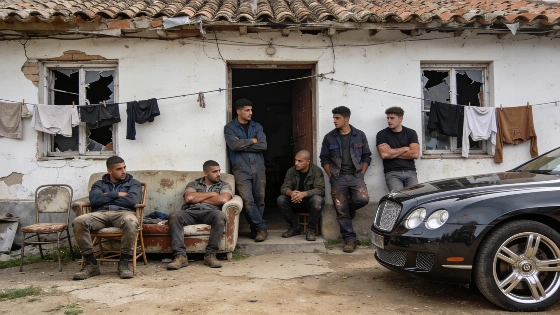
Luxury cars parked outside run-down houses are now a common sight in Nava del Rey, Valladolid. Behind the wheel are the so-called bosses who organize crews of migrant workers, moving them from one harvest to the next. The real scandal isn’t just the fieldwork—it’s the cramped, unsafe living conditions these workers face, while local landowners and intermediaries collect the profits.
Inside these makeshift homes, as many as forty people sleep on mattresses laid across dirty floors, with broken windows and laundry lines strung through the rooms. Many of these buildings were once shops or social clubs, now turned into barely livable shelters. Both authorities and residents call the organizers "mafias," but in local bars, it’s openly acknowledged that Spanish employers are just as responsible for the exploitation.
В предоставленном тексте речь идет о неформальном рынке сельхозтруда в провинции Valladolid, где мигрантов селят в переполненных и небезопасных зданиях.
Walk through town at midday and it’s hard to miss. Young men from Morocco and Eastern Europe gather on sidewalks or cook in cramped kitchens. Others try to escape the heat outside, or drag their mattresses outdoors to sleep in the open air during the hottest nights, unable to stand the conditions inside.
Locals are split. Some downplay the problem, insisting it’s exaggerated. Others call it modern-day slavery, pointing to the visible wealth of crew leaders—new cars, large houses—while the workers live in misery. The agricultural sector’s dependence on these foreign crews is obvious: as working conditions have worsened, local youth have left the fields, leaving migrants to fill the gap, managed by these networks.
Conflicts sometimes break out—arguments over money, trouble adapting, or fights after drinking—but even critics of the workers say the real problem is higher up. The real power, they argue, lies with those who hire the crews and ignore the living conditions. A bartender blames the landowners for keeping the system going.
Для подтверждения ключевых элементов сюжета, таких как наличие организованных посредников, причастность землевладельцев и масштабы нарушений, необходимы конкретные данные из местных судов, полиции, инспекции труда и официальных испанских СМИ. Официальные заявления Guardia Civil, Inspección de Trabajo и Junta de Castilla y León считаются основными источниками для верификации подобных случаев.
With local festivals coming up, there’s growing anxiety about possible clashes between long-time residents and the rising number of foreign workers. Complaints about noise, drinking, and lack of integration are common, and some residents openly express frustration and racism. But the underlying issue remains: the town’s shrinking population and the agricultural sector’s reliance on imported labor, managed by increasingly organized mafias.
Officials in Valladolid confirm the pattern: foreign workers packed into substandard housing, properties bought up by intermediaries taking advantage of rural depopulation, and a constant flow of workers from one job to the next. Attempts to intervene are blocked by legal loopholes and front companies, making it nearly impossible to hold organizers accountable. Oversight of housing falls to the regional government, but inspections rarely lead to action unless the employer owns the property directly.
One official says the only real solution would be a coordinated investigation by the Fiscalía and Guardia Civil, but admits that local politicians, major landowners, and even social agents are caught up in the system. The same people profiting from the exploitation, the official notes, often support hardline political parties like Vox.
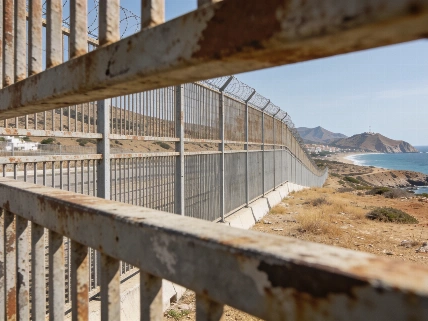
The regional government shifts blame to the municipalities for the housing crisis. The mayor stays silent, only issuing calls for solidarity with Ceuta. On the streets, residents avoid naming names, but everyone knows who controls the labor market. Bosses negotiate openly with landowners in bars, setting prices for vineyard work and moving crews as needed. The workers, often misled about what awaits them, get little more than food, a shower, and a 5 a.m. ride to the fields.
As Nava del Rey’s population declines, the town’s economy is increasingly tied to this shadow system. The old order—where Spanish landowners held all the power—has changed. Now, Romanian crew leaders and their networks run the fields, and without them, the harvest wouldn’t happen. The reality is clear: the agricultural engine of rural Spain now runs on the labor of migrants living in conditions that would have been unthinkable a generation ago.
While the exploitation of migrant labor isn’t unique to Nava del Rey, the town’s situation exposes the contradictions of Spain’s rural economy. Authorities’ inability to dismantle these mafias, along with the silent complicity of local elites, keeps the cycle going. As highlighted in a previous investigation, the mix of local politics, business interests, and legal inertia often leaves vulnerable groups without protection. Until the system that rewards both the mafias and their clients is confronted directly, the exploitation will continue—hidden in plain sight, fueling resentment and shaping the future of Spain’s countryside.