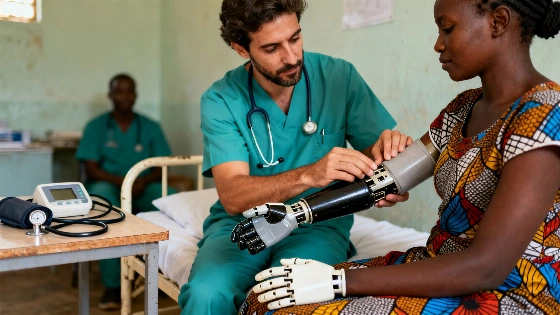
Dr. Cavadas Performed One Hundred Operations in Ten Days in Tanzania. In Tanzania, Dr. Cavadas’s team performed one hundred surgeries in ten days. Patients travel from remote villages to get a chance at a new life. Special attention is given to women and children.
A medical mission has concluded in Tanzania, during which Dr. Cavadas’s team from Valencia performed one hundred surgeries in ten days for residents of remote villages. People travel dozens of kilometers on foot to see the Spanish surgeon, whose work has become the only chance to regain their health for many. According to Cavadas, even if only one person can be helped, the effort is worthwhile.
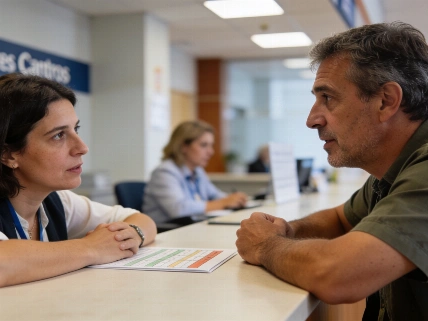
The first episode of the documentary project 'Operación África,' available on RTVE Play, shows the challenges faced by the team: shortages of medications, anesthesia delays, and difficult surgical conditions. Doctors are forced to shorten the postoperative period to just one or two days to treat more patients. Cavadas notes he cannot help everyone: in one trip he manages to operate on a hundred people, but hundreds more await the next visit.
Special attention during the mission is given to women. In African villages, they are responsible for all household and outside work. Any physical injury or congenital condition for a woman means losing her ability to provide for her family. The film tells the story of Salome, who had to have her arm amputated due to infection. Thanks to Cavadas’s intervention, she survived and is now awaiting a prosthesis. She emphasizes that without the doctor's help, she might have died or been left disabled.
Among the patients are children. Four-year-old Mandoo from the Maasai tribe was unable to walk due to a severe foot burn that had gone untreated for three years. Cavadas performed surgery to restore function in her leg, and now the girl can look forward to a full life in her community. After the procedure, the family was able to return home by motorcycle, avoiding hours of walking. Doctors plan to perform another operation to fully restore the mobility of the child's knee.
Cavadas' medical mission not only restores the health of individual patients but also raises the issue of access to medical care for residents of isolated regions. In circumstances where women bear the main burden and children often remain untreated, such projects become the only chance for change. As the team notes, local people believe not only in God but also in Dr. Cavadas, who for many has become a symbol of hope.
In Spain, interest in such initiatives is growing amid discussions about the role of medicine in international humanitarian projects. For comparison, there are also events in sports that draw attention to international cooperation: recently, an Italian tennis player secured a spot for his country in the Roland Garros final, as reported in the article about Cobolli reaching the semifinals.
For reference: Dr. Pedro Cavadas is known in Spain and beyond as a specialist in the most complex reconstructive surgeries. His missions in Africa are partially funded by charitable foundations. According to RUSSPAIN, such projects are increasingly in demand amid a shortage of medical assistance in several regions of Africa. In Spain, Cavadas' work attracts the interest not only of the professional community but also of the wider public following the progress of humanitarian initiatives.