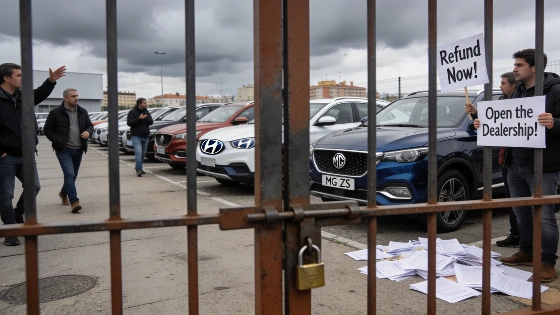
Nearly 100 customers in Madrid are still waiting for cars they paid for months ago. Cobendai dealerships have stopped operations, leaving 170 employees unpaid and dismissed. Hyundai and MG scramble to address the fallout.
Dozens of Madrid residents who paid for new vehicles months ago remain without their cars, as the Cobendai dealership group’s financial crisis deepens. The company, which managed official dealerships and workshops for Hyundai, Peugeot, Suzuki, Subaru, KGM, and MG, has halted commercial activity, leaving both customers and employees in limbo. According to local reports, nearly 100 buyers are still waiting for vehicles, some since late 2025, while 170 staff have not received salaries since April and are now receiving dismissal notices.
The situation escalated after Cobendai entered pre-insolvency proceedings and initiated a collective redundancy process (ERE) that ended without agreement. Employees say the last full salary was paid in March, with only a partial advance since then. Many have had to seek financial help from relatives, as the company’s debt reportedly stands at €21 million. Workers describe a climate of uncertainty, with no clear communication from management and no severance payments delivered.
For customers, the ordeal is equally severe. Some, like Francisco José Murcia, have been waiting over seven months for vehicles fully paid for in advance. Despite promises of refunds or imminent deliveries, many buyers have seen neither their money nor their cars. In April, Cobendai began handing over some vehicles, but the process abruptly stopped, leaving dozens still without resolution. Buyers who financed their purchases continue to pay off loans for cars they have never received, and attempts to contact the company have gone unanswered.
The crisis also affects those who purchased MG vehicles through Cobendai’s ASIMCO dealerships. Customers report being offered substitute cars by MG, but only under strict conditions, such as a €500 deposit and a 3,000-kilometre monthly limit. Others, like Silvia Corchero, have filed formal complaints and requested refunds, but have received no response from Cobendai or the manufacturers. Hyundai has acknowledged the backlog and says it is working to resolve outstanding deliveries, but admits that some cases are more complex than others.
Beyond sales, the collapse has disrupted after-sales services. Clients who prepaid for maintenance packages at Cobendai workshops now find themselves unable to access scheduled servicing. Some have had to pay again at other workshops to keep their vehicles in warranty, as neither MG nor Cobendai has provided solutions or compensation.
The Cobendai case highlights the risks faced by consumers and workers when dealership networks fail. In Spain, car dealerships often act as intermediaries between manufacturers and buyers, handling both sales and after-sales services. When a dealership collapses, customers can be left without vehicles or recourse, and employees may lose months of income. The situation in Madrid has prompted renewed calls for clearer consumer protections and more robust oversight of dealership finances. As of now, both Hyundai and MG have pledged to address the remaining cases, but many affected individuals remain in uncertainty, awaiting either their vehicles or financial restitution.