Thousands marched across Spain after Congress rejected emergency housing measures on October 2, 2026. Renters demanded lower costs and protection from evictions as pressure grew on Prime Minister Pedro Sánchez.
Congress rejected both housing decrees on October 2, 2026. The first vote ended 178 to 172 and the second 184 to 166. Proposals on evictions, rental contracts and investment funds failed to pass. More than 50 demonstrations followed across Spain.
Reuters and the BBC called the defeat a major political setback for Pedro Sánchez's coalition government. The vote turned a housing dispute into a direct challenge to the government.
Crowds gathered in Madrid, Barcelona, Valencia, Málaga, Santiago de Compostela, Zaragoza, A Coruña, Alicante, Santander and Las Palmas de Gran Canaria.
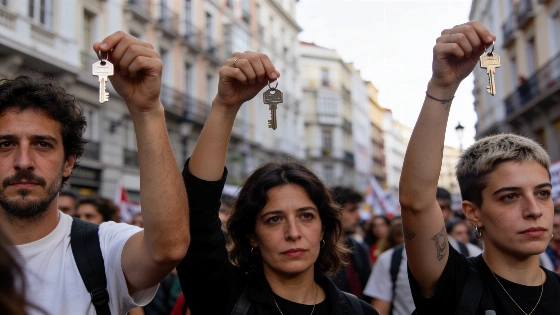
Renters called for lower prices and an end to evictions. They also demanded restrictions on property purchases by investment funds known in Spain as «fondos buitre».
Raised house keys became the clearest symbol of the protests.
In Madrid, many demonstrators came from Puerta del Sol, where dozens of people had camped for several days. Xinhua reported that the camp began on September 26 and became a basic mobilisation point before the march to Congress.
David, one of those staying at the camp, told RTVE he remained there out of conviction rather than comfort. Marcos Sainz, a 26-year-old librarian, told AFP he once paid 900 euros a month while sharing a two-bedroom flat with friends. He said a one-bedroom home now commonly costs 1,000 euros.
Sainz said he would keep protesting until rents were properly regulated. Otherwise, he said, people would be forced to leave Madrid.
The pressure is measurable. Idealista reported that rental costs rose 8.5% across Spain in 2025 and 9.7% in Madrid. Barcelona and Madrid were the country's most expensive cities for tenants, at 23.80 euros and 22.70 euros per square metre, respectively.
The immediate trigger was the eviction of Maricarmen Abascal, an 87-year-old woman who could not afford a sharp rent increase.
An agreement with the property company later allowed her to return home. By then, her case had fueled protests across the country and focused public anger on landlords, speculation and investment funds.
Valencia saw the most serious clashes. A property summit was taking place near the Palau de les Arts Reina Sofía. Some protesters removed barriers and threw objects at police.
Officers used rubber bullets and tear gas. RTVE reported that nine police officers were injured and five people were arrested.
Madrid's demonstrations passed without serious incidents. Heavy rain forced Barcelona to postpone its mobilisation.
The rejected package contained two decrees. One would have suspended evictions of vulnerable tenants until 2030 and extended by two years rental contracts expiring before 2028.
The same decree proposed higher taxes on tourist apartments and restrictions on residential purchases by investment funds.
The second decree proposed automatic renewal of rental agreements, a central demand of the left and tenant unions.
The package went beyond eviction protection, targeting short-term rentals and large-scale investment in residential property as well.
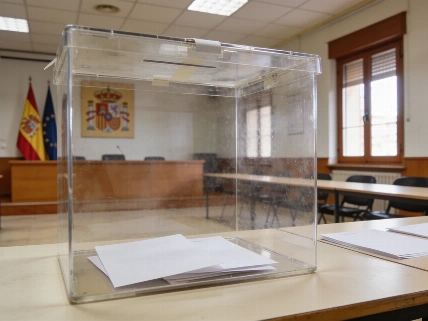
Congress rejected the first text by 178 votes to 172 and the second by 184 votes to 166. The conservative Partido Popular and far-right Vox had already declared their opposition.
The government needed support from smaller nationalist parties in Catalonia and the Basque Country. Junts per Catalunya opposed the initiative before the vote. Reuters reported that the party argued the proposed restrictions could tighten the housing market instead of expanding access to homes. Its position was decisive after the Partido Popular and Vox opposed the decrees.
The defeat has fueled talk of an early general election and raised pressure on Prime Minister Pedro Sánchez.
Elections must be held no later than next summer. Euronews reported that the Madrid Tenants' Union had threatened a general strike and contacted Unión General de Trabajadores and Comisiones Obreras.
If organised, the action would be Spain's first general strike since 2012.
The housing shortage gives the protests a solid economic foundation. The Banco de España estimates a deficit of more than 700,000 homes. Without action, it warned, the gap could reach one million within two years.
House prices rose 12.2% over the year, information from second-quarter 2026 figures from the Instituto Nacional de Estadística.
Those figures show why the parliamentary defeat amounts to more than a narrow legislative loss. The government's proposals were limited, and they failed.
The pressure behind them is growing: rents are higher, the supply gap is wider and tenant groups are more organised.
The political cost is now tied to housing costs. Unless Congress produces measures renters can use, the protests are likely to continue.