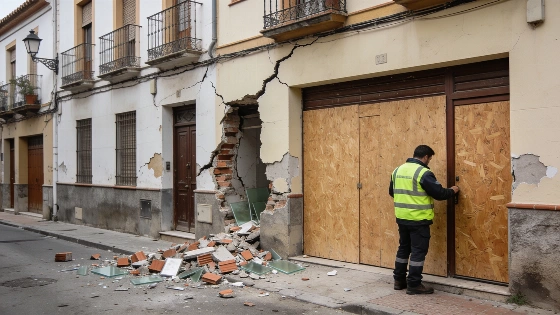
A month after a wave of earthquakes hit Granada, over 200 people are still unable to return home. Damaged buildings, slow repairs, and insurance hurdles leave families in limbo. Authorities face mounting pressure to deliver solutions.
More than 200 people in Granada and nearby towns are still unable to return home, a month after a series of earthquakes forced emergency evacuations and left entire buildings unsafe. The slow pace of repairs and delays in compensation have left many families stuck in temporary housing, with no clear timeline for when they can go back.
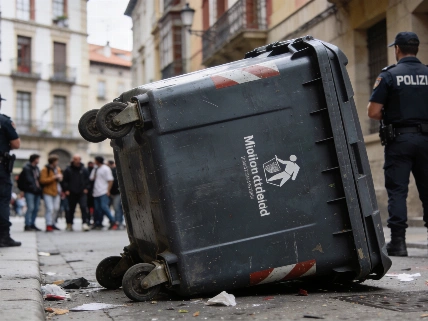
The first tremor, a 3.7-magnitude quake, hit on August 14. Just hours later, a stronger 4.8-magnitude earthquake struck after midnight, sending residents into the streets. The worst damage came on August 18, when four significant quakes—again reaching 4.8—hit in a single day. Buildings in Granada, Armilla, and Las Gabias suffered structural damage. Cornices and chimneys fell, cars were crushed by debris, and entire blocks were declared unsafe. While there were no serious injuries, the material losses and stress have been considerable.
By September 8–13, the seismic series in Granada had already reached over 1,700 tremors, highlighting the prolonged instability in the region.
Some of the hardest hit are the 117 residents of the Centro Psicopedagógico Reina Sofía in Armilla, a facility for people with severe intellectual disabilities. They are still scattered across temporary accommodations, with no date set for their return. In Las Gabias, about 100 people from a 42-home development, and in Armilla, residents from a 36-apartment block, remain displaced. In Granada city, 85 homes are still evacuated. Twenty-four people are staying in shelters, while others rely on relatives or second homes.
For people like José Vaca, vice president of the San Francisco III community in Las Gabias, the past month has meant moving five times in five weeks. After initial repairs, more tremors forced repeated evacuations. Vaca describes the experience as chaotic, with only brief, scheduled access to belongings. His building needed urgent structural reinforcement, and teams from the CSIC, Instituto Torroja, Intemac, and the Grupo de Arquitectos Voluntarios de Emergencias (GAVE) have all inspected the damage.
GAVE, a volunteer group of 300 architects, quickly identified 60 buildings as dangerous, including eight in Gójar that have since been demolished. Gójar's mayor, Joaquín Prieto, says the town was hit especially hard and is now focused on making sure insurance claims are processed quickly. The Ministry of Economy has assigned 250 adjusters to handle the 49,092 compensation requests so far—42,100 for homes and communities, over 2,300 for businesses, and the rest for vehicles and other property. Granada leads with 25,468 claims, followed by Armilla and Ogíjares. Requests have also come in from dozens of towns in Málaga, Jaén, and Almería.
According to regional authorities, the earthquake sequence officially began on August 14 and the risk regime remained active until September 8, when it was shifted to a recovery phase. The government of Andalusia announced a €46.2 million aid package for affected municipalities, with funds allocated for infrastructure, public buildings, housing, and essential services such as health and education.
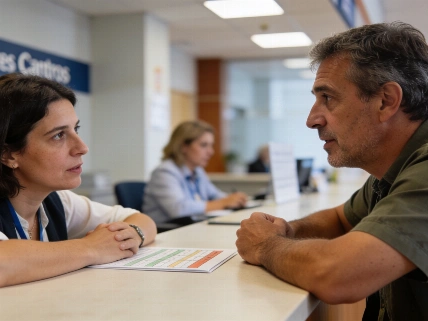
However, the Consorcio only covers those with insurance. For people without coverage, the 2005 Royal Decree on disaster aid offers up to 50% of repair costs, and the government is expected to declare the area a civil protection emergency zone soon, which would unlock more support. The Junta de Andalucía has pledged €46 million in aid, with €8 million for housing and €7 million for municipalities. Local officials warn that complicated paperwork could make it hard for some families to actually get help.
The earthquakes have also damaged some of Granada’s historic sites. The Alhambra is still partly closed because of structural problems in the Torre del Homenaje and Torre Quebrada. The cathedral reopened after inspection, but the Basílica de la Virgen de las Angustias remains closed due to dome damage. The Hospital Real, which houses the University of Granada’s rectorate, is under restoration. Repair costs for public heritage sites are estimated at over €4.5 million.
Not every town was hit equally. Alhendín, which gave its name to the seismic sequence, had only four homes seriously damaged, with most of its €400,000 in losses affecting the cemetery. Across the region, the full extent of the destruction is still being counted, echoing the slow recovery seen after other recent disasters in Spain, such as the Devesa del Saler wildfire in Valencia reported earlier.
The earthquakes have exposed weaknesses in both Granada’s infrastructure and the systems meant to help residents recover. Delays in compensation, complicated aid processes, and ongoing uncertainty for hundreds of displaced people show how hard it is for the system to keep up with the scale of the disaster. Until support is easier to access and repairs move faster, many families will remain in limbo.