Clara Sánchez Spoke Out Against Realism and Time at La Revuelta Meeting. At a meeting in La Revuelta, writer Clara Sánchez declared that she does not believe in death or time. She called for a rejection of realism in literature and a return to magic. The discussion also centered on technology and cultural trends.
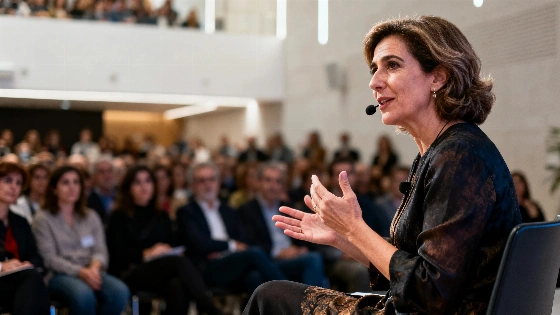
A meeting with writer and philologist Clara Sánchez took place at La Revuelta in Madrid, where topics such as time, death, and reincarnation were discussed. Sánchez, presenting her new novel Lo inexplicable, openly stated that she neither acknowledges death nor the passage of time, and considers realism in literature an exhausted movement. According to her, modern readers should return to magic and seek new forms of artistic expression.
During the conversation, Sánchez drew on the ideas of philosopher Epicurus and physicist Carlo Rovelli, reflecting that if time does not exist, then death loses its meaning as well. She emphasized that reincarnation is not merely an esoteric concept, but part of human nature, manifested in ongoing changes in personality and the inheritance of not only outward but also psychological traits. Sánchez noted that quantum physics is actively exploring these questions today, and that skepticism toward reincarnation does not prevent her from viewing this phenomenon as an open possibility.
The writer also commented on the influence of technologies and the virtual environment on contemporary culture. She admitted that she is not sympathetic to figures like Elon Musk, believing that technological trends are pushing out the spoken word and spiritual pursuits. At the same time, Sánchez humorously noted that she would like to attend a Bad Bunny concert, but was unable to get tickets, which turned out to be an unexpectedly strong disappointment for her.
In a conversation with host David Broncano, Sánchez supported his aspiration to join the Royal Spanish Academy, noting his ability to express ideas vividly and freely. She also recalled the recently deceased academician José Manuel Blecua and emphasized that literature needs new voices and approaches. Interestingly, the Spanish media are increasingly discussing unconventional views on culture and freedom of expression—recently, for example, host Henar Álvarez staged an unusual performance on TVE to draw attention to the issue of women's freedom (details about the protest on TVE).
Contextually, it is worth noting that Clara Sánchez is one of the few contemporary Spanish women writers who are members of the Royal Academy. Her stance on spirituality and literary movements reflects a growing interest in alternative perspectives on life and art within Spanish society. In recent years, debates about the role of technology, cultural trends, and new forms of identity have intensified in Spain, making these kinds of statements particularly relevant to a wide audience.