Growth of Evangelical Churches in Madrid: Buses with Ads and Stadium Events. The number of evangelical churches in Madrid has increased by 30% over the past decade. Advertisements for religious festivals have appeared on city buses. These events attract tens of thousands of people and draw the attention of politicians.
In Madrid, the influence of evangelical churches has grown significantly in recent years. Over the past decade, their number has increased by 30%, and religious events are now held not only in temples, but also at major city venues. In May, advertising for the 'Festival de la Esperanza' featuring American preacher Franklin Graham appeared on buses of the EMT city transport company. Organizers rented 12 buses for a month to invite city residents to a mass gathering at Palacio Vistalegre.
Migration and new centers
The expansion of evangelical communities is closely linked to migration processes. According to the Observatorio del Pluralismo Religioso, in 1998 just 0.2% of Spain’s population identified as evangelical, but by 2018 this figure had risen to 2%. In Madrid, the number of evangelical centers grew from 662 to 855 in ten years. Churches are opening especially quickly in areas with a high proportion of migrants — Carabanchel, Usera, Tetuán. Here, former industrial sites and commercial spaces are being converted into venues for worship, meetings, and social support.
In such churches, migrants find not only religious, but also practical support: they organize free meals, help with job searches, discuss political issues, and even encourage voting in elections. According to sociologist Paola García, it is these functions that make evangelical communities a focal point for the city's new residents.
Mass events and publicity
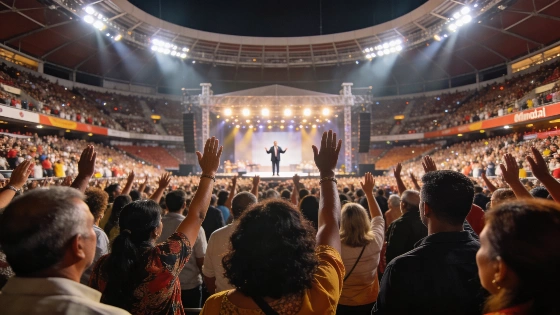
The format of religious events is changing: they are now not only traditional services but also large-scale shows with music, lighting, and celebrity guests. In May, the Riyadh Air Metropolitano stadium hosted the Christian event The Change Madrid 2026, which gathered about 35,000 people. Among the speakers was former footballer Dani Alves, who spoke about his turn to faith after being imprisoned. Organizers emphasize that such gatherings are becoming the largest in Europe in terms of attendance.
Last year, 10,000 people filled the Vistalegre arena for a performance by Brazilian preacher Edir Macedo, founder of the Igreja Universal do Reino de Deus. According to arena representatives, rental terms for such events are not disclosed and are regulated by private agreements.
Political contacts and risks
The growth in the number of evangelical churches has not gone unnoticed by politicians. In 2023, the Partido Popular began to engage more actively with leaders of evangelical communities, hoping to gain the support of Latin American voters. One prominent figure is Pastor Yadira Maestre from Fuenlabrada, who has repeatedly provided her church for political events and presented awards to regional authorities.
Within the communities themselves, experts note both positive effects—such as creating a supportive environment for migrants—and risks: in some cases, power becomes concentrated among charismatic leaders, and promises of miracles and prosperity are used to attract new congregants. Researcher Luis Santamaría del Río emphasizes that emotional services, belief in the supernatural, and the “theology of prosperity” make such churches especially appealing to vulnerable groups.
Religion in the public sphere
The public presence of new religious movements is becoming a notable feature of urban life. Advertising on public transport, renting stadiums, and large mass gatherings are all transforming the usual image of Madrid. As with major Catholic events, such as papal visits to Barcelona, religious initiatives have become subjects of public debate and controversy. For example, recently, the Barcelona authorities provided the Olympic Stadium for a meeting with Pope Leo XVI,which sparked discussions about the role of religion in public spaces.