Fernando Grande-Marlaska has formally protested Judge María Tardón’s order that bars police from updating their superiors on the Ceuta migration crisis, exposing an unusual clash between Spain’s Interior Ministry and the judiciary.
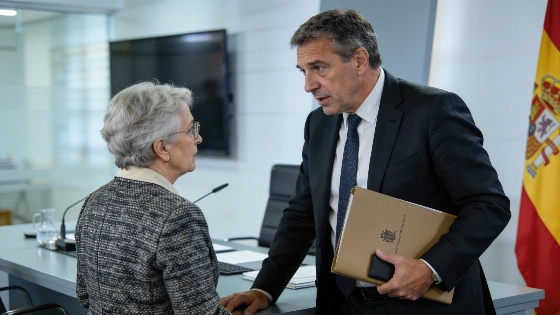
Spain’s Interior Minister, Fernando Grande-Marlaska, has formally raised concerns with the country’s top judicial authority after Judge María Tardón barred police investigators in Ceuta from sharing updates with their superiors. In a letter to Isabel Perelló, president of the Consejo General del Poder Judicial (CGPJ), Grande-Marlaska challenged the judge’s decision to restrict information flow during one of Spain’s most sensitive border crises.
The dispute centers on Judge Tardón’s order to keep the police team investigating the Ceuta migration surge isolated from their own chain of command. The order, described as highly unusual, means the Interior Ministry is left out of developments that could affect national policy and emergency response. According to Spanish media, the judge instructed that information from the police investigation into the mass entry into Ceuta be reported only to her, bypassing the ministry’s administrative channels.
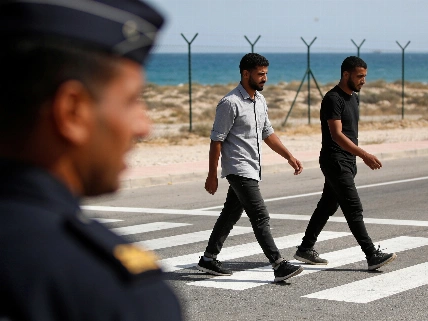
Recent police reports estimate that around 72,000 people crossed into Ceuta during the late July surge, a figure repeatedly cited as the baseline in official and media accounts.
Grande-Marlaska’s letter, confirmed by ministry sources, argues that in a crisis of this scale, police should be able to meet judicial requirements while also keeping their superiors and political leaders informed of findings relevant to crisis management. The minister, a former magistrate, stressed his respect for judicial independence and the constitutional duty to cooperate with the courts. Still, he warned that the current arrangement could undermine the government’s ability to respond quickly to events at the border.
The Interior Ministry says the minister’s intervention is not an attempt to override the judiciary, but a call for balance: police must answer to the courts, but also to those responsible for public safety and political decisions. The ministry maintains that police obligations to the judiciary and to their own hierarchy should not conflict, especially when national security is involved. The director of the National Police, Francisco Pardo, has publicly stated that, according to the ministry, there is no police report directly blaming Moroccan security forces for the Ceuta events, despite some media leaks suggesting otherwise.
This is not the first time the Ceuta crisis has revealed deep institutional tensions. As reported earlier, Judge Tardón previously acted to keep sensitive police findings out of political hands, leaving the Interior Ministry seeking information. The current standoff raises further questions about transparency, accountability, and the limits of judicial authority in Spain’s security system.
The judicial investigation, led by Judge Tardón in the Audiencia Nacional, is examining whether the mass entry into Ceuta could constitute a coordinated criminal act or a threat to national security. This has given the case not only a migration dimension but also potential criminal and state security implications, according to official court sources.
Grande-Marlaska’s letter does not demand a reversal, but it clearly questions Judge Tardón’s approach. The Interior Ministry argues that keeping police findings secret from their own leadership could hinder crisis management and leave political leaders without key information. In Spain, where the separation of powers is closely guarded, the Ceuta case highlights the friction that can arise when legal independence meets the practical needs of government. For now, the balance between judicial integrity and executive effectiveness remains unsettled.