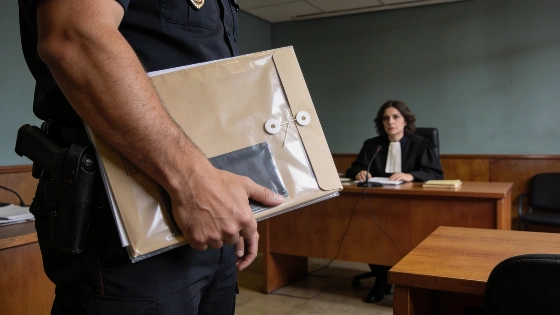
A confidential police report directly implicates Morocco in the El Tarajal border incident. Judge María Tardón took extraordinary steps to prevent political interference. The Interior Ministry was left out of the loop and forced to react.
Spain’s Interior Ministry was caught off guard when a confidential police report, ordered by Judge María Tardón, arrived on its desk. The report pointed directly at Morocco as the organizer of the mass border crossing at El Tarajal. The response was immediate: Minister Fernando Grande-Marlaska demanded answers overnight, then publicly denied the report’s main conclusions. Official statements from the Interior Ministry insisted the document sent to Judge Tardón did not say Moroccan security forces "planned or executed" the crossing, despite what was reported in the press.
Judge Tardón saw the risk of political interference coming. She avoided the usual channels, working with trusted police contacts to pick an investigative team less likely to be influenced from above. Officers from the Comisaría General de Extranjería were told to report only to her, not their superiors or the ministry. For nearly a month, these agents worked in isolation, keeping their findings from even their own colleagues. Several media outlets, citing the CENIF report, say it includes photos and video showing Moroccan gendarmes and plainclothes figures directing migrants in the El Tarajal area.
The CENIF report estimated that between 72,000 and 80,000 people attempted to cross into Ceuta at the end of July, with different publications citing varying figures.
The CENIF report, delivered under strict confidentiality, accused Moroccan authorities of using the border as a political tool—a tactic Spanish police had warned about for years. Despite repeated alerts from law enforcement and local officials in Ceuta, the Spanish government did not act before the July surge, when up to 80,000 people tried to cross at El Tarajal. According to several sources, the report describes advance planning and the use of migration pressure as a tool, not a spontaneous event. The mass movement began after a spike in border-crossing messages on July 28 and 29.
Judge Tardón’s approach was careful and by the book. She used Article 15 of Royal Decree 769/1987 to put the police under her direct authority for this case. She also brought in the Guardia Civil, assigning the Information unit instead of the more politically exposed Policía Judicial. Information handles migration, while Policía Judicial focuses on human trafficking. The Guardia Civil’s report is still pending and could add more complications for the government.
Once news of the report broke, the Interior Ministry scrambled to control the story. Marlaska insisted the document did not blame Moroccan security forces, even as evidence suggested otherwise. Inside the Comisaría General de Extranjería, frustration grew. Officers pointed out that weekly video calls with Interior, Ceuta, Melilla, Guardia Civil, and Policía Nacional had flagged the unusual situation well in advance. "They knew," one source said.
Judge María Tardón reportedly structured the investigation to minimize the risk of political interference, assigning the case to the migration and borders police unit and restricting information leaks through the usual administrative hierarchy.
This is not the first time the Ceuta crisis has exposed tensions between Spain’s security forces and political leaders. Operational decisions have often clashed with official statements.
Judge Tardón’s record—handling cases against both the Partido Popular and Catalan separatists—has built her reputation for independence. In this case, she worked to keep the investigation free from political or bureaucratic interference, leaving the government struggling to regain control of the story.
The result is a clear picture of mistrust at the top. The government’s first response was to call the border incident an "attack on integrity," but that quickly shifted to denial and attempts to blame Russia, Israel, or unnamed criminal groups. The facts remain: Spanish authorities received multiple warnings, did not act, and now face the fallout from a process Judge Tardón kept out of political hands. In a system where responsibility is often blurred, this case stands out for its clarity—and for the discomfort it has caused.