The use of the veil has sharply declined in Iran since Mahsa Amini's death. Laws and repression remain, but public defiance is growing. Authorities face a challenge as women refuse to return to old restrictions.
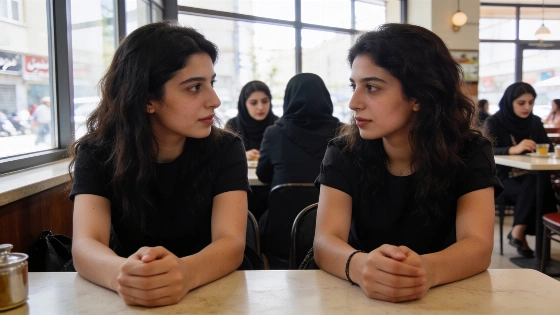
In Tehran's busy cafés, women now sit with uncovered hair and short sleeves—something rarely seen just a few years ago. The change is clear: many women openly ignore the mandatory veil, even in cities like Isfahan that were once more conservative. But while the streets look different, the laws and state pressure have not changed. Reports from independent Iranian and international media describe ongoing crackdowns: businesses are temporarily closed, and women who break dress codes risk having their bank accounts or SIM cards blocked.
This shift began after Mahsa Amini's death in September 2022. She was detained by Iran's morality police for allegedly violating dress codes and died in custody at 22. A 2024 United Nations investigation found signs of physical trauma, linking her death to violence while detained. Iranian officials rejected the findings and denied responsibility. UN Special Rapporteur Mai Sato called Amini's death unlawful and part of a wider pattern of state violence, with some elements meeting the definition of crimes against humanity.
Despite the formal suspension of the strict hijab law in December 2024, enforcement continues in practice through arrests, warnings, and digital sanctions.
After Amini's death, protests broke out across Iran. Women and men marched, risking arrest and violence. Amnesty International counted 377 deaths during the demonstrations; Iranian officials admitted to 202, blaming 'vandals' and 'armed terrorists.' Eyewitnesses and social media videos pointed to security forces as the main source of violence. United Nations and human rights groups reported mass detentions, torture, and sexual violence, though the full extent is likely hidden by government censorship.
Still, the 'Woman, Life, Freedom' movement grew. Young women like Maryam, a 23-year-old photography student, describe both fear and pride in going out without a veil for the first time. Many paid a heavy price: deaths, jail time, expulsions from universities, and reports of torture. Yet refusing the dress code has become a daily act of resistance. Independent observers say unveiled women are now a common sight in public spaces—universities, cafés, shopping centers, and on public transport—making this one of the most visible forms of civil disobedience in recent years.
Older women tend to be more cautious, often covering up when entering official buildings. But change has sped up, especially after the US and Israel attacked Iran in February. Even state media, during wartime coverage, showed women with uncovered hair at anti-Western protests—a sharp contrast to official policy.
Reports indicate that morality patrols and street checks have been reintroduced in several cities, with new waves of arrests and increased involvement of Basij and security forces, particularly in Isfahan, Rasht, Fuman, Mashhad, and Nishapur.
Officials have sent mixed messages. Some parliamentarians call for harsher penalties for women who refuse the veil, warning of a slide toward 'nudity.' Meanwhile, leaders like Hussein Taeeb of the Basij militia and the new Supreme Leader Mojtaba Jameneí have called for unity and warned against actions that could split society. This has led to the suspension of stricter dress code laws, as officials worry about more unrest during economic hardship. According to international news agencies, some Iranian officials now admit the government cannot enforce hijab rules as strictly as before because of "wartime conditions," even as conservative factions push for tighter control.
Legal experts warn that the new freedoms are fragile. The laws have not changed, and most women's rights groups are still silenced. Women's participation in public and political life has stalled or even declined. Problems like gender-based violence and divorce remain unresolved, and activists say the main fight for rights is far from over. Recent United Nations reports note that the gap between the law and what happens on the ground shows how complicated the situation is.
Cafés that break the dress code may be closed for a time, but usually reopen after paying fines. Women keep ignoring threats, showing that the state is losing its grip on daily life. Still, as one human rights lawyer points out, the authorities have changed tactics: they are easing enforcement to avoid new protests, not because they want to give up control.
The situation in Iran is a paradox. Acts of defiance are everywhere, but the laws and repression remain. The government's retreat on the veil is a tactic, not a change in belief. Without legal reforms and a return of activists' voices, the fight for women's rights in Iran is not over. This moment is less a victory than a fragile pause in a much longer struggle.
For Spain and other countries watching, Iran's experience shows that social change can move faster than the law, but without deeper reforms, progress is always at risk. Iranian women have shown remarkable resilience, but the system's resistance is just as strong.