Javier Cámara shares how his complicated relationship with his father shaped his life and career. The acclaimed actor reflects on missed connections, personal growth, and the impact of fatherhood in a story that resonates far beyond the screen.
Javier Cámara’s biggest regret has nothing to do with acting. It’s the silence that hung between him and his father. That silence never broke. His father died before they could speak honestly. Cámara still carries words he never got to say.
“My father was the best father for everyone, except for me.” Cámara lays it bare. Friends saw his father as charming and funny. Cámara felt like a stranger at home. His mother summed it up: “Es un bien de casa ajena.” Loved by everyone else. Distant from his own son.
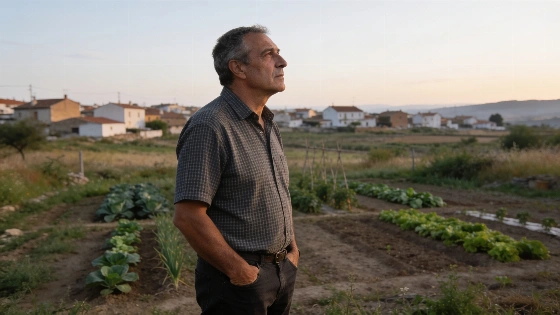
Javier Cámara was born in Albelda de Iregua, La Rioja, where his father Teodoro worked as a farmer managing two small plots of land.
Life in Albelda de Iregua offered little choice. Cámara’s father, Teodoro, farmed two small plots. He expected Javier to follow. By 14, Cámara saw his future: early mornings, hard work, and crops ruined by storms. He watched his father struggle with money and disappointment. “I realized it wasn’t a good business. So we didn’t get along very well.” La Razón reports that the family’s dependence on farming shaped both Javier’s path and the tension when he chose something else.
This realization split them apart. When Cámara left for Madrid, his father said nothing. The silence was heavy. Cámara thinks his father felt sadness, maybe even pride. Teodoro had once played saxophone and dreamed of music. Family needs pulled him back to the fields. Cámara remembers him as “overwhelming, with a brutal personality, funny—my friends were in love with him.”
Years passed. Cámara started to see his father in himself. The contradiction stayed. Others adored his father. Their own bond stayed tense. Time changed his view. An interview with chef Martín Berasategui hit home. Berasategui mourned that his father never saw his success. Cámara cried. He wished his father could see the life he built. El Mundo confirms that these unresolved family wounds and his father’s memory still shape Cámara’s work and life. Starting his own family made him feel "much more fragile and at the same time stronger."
Becoming a father made the longing sharper. Cámara adopted two children. He believes his father would have loved them. “He was great with kids and hilarious,” Cámara says. He imagines the joy his father would have found as a grandfather. Fatherhood forced Cámara to look back at his own childhood and the choices that took him away from home.
In September 2026, Javier Cámara received his second Concha de Plata for Best Supporting Actor, a milestone that coincided with renewed public reflection on his relationship with his late father. Major Spanish media note that this award marked a particularly beautiful moment in his life, even as he expressed embarrassment to say it aloud for fear it might end.
Teenage years in his village felt like a cage. “I was a teenager who couldn’t breathe in his town,” Cámara says. Madrid was freedom. It was a chance to find himself, his sexuality, and his happiness. His father never saw this change. He died when Cámara was about 26, during the filming of the last episode of ‘¡Ay, Señor, Señor!’. “That day was brutal,” Cámara says.
Back then, Cámara admits, he was lost. “I was unconscious, never really present in life. Now I am: in my place, with my partner, my children, my many mistakes, forgiving myself.”
The lack of a real goodbye haunted him. When he got the script for ‘Truman’, Cámara saw a way to face this pain through acting. “I’ll finally learn to say goodbye to someone, to accompany someone in their farewell.”
Some words still remain unsaid. “I would have loved to tell my father: ‘Papi, damn, what years I gave you. Forgive me.’” This shapes how Cámara is with his own children. He wants to spare them the fears and doubts he carried for so long.
The shadow of a father never leaves. “A father will always follow you, and the interesting thing is not to run from it.” Cámara’s rule for his kids is simple: “Leave your kids alone and help them become who they are.”
Stories of unfinished family business and absence are everywhere. As reported earlier, the pain of loss and unsaid goodbyes can shape a life for years. Cámara’s honesty gives a rare look at the struggles behind his public success. Sometimes, the legacies that matter most are the ones we never get to share.