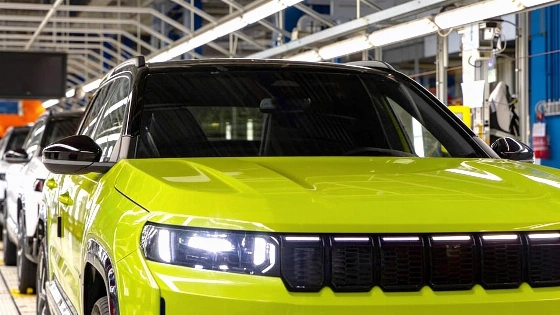
Stellantis has committed €1.072 billion to a partnership with Dongfeng that will bring future European Jeep SUV production to China, drawing on the company’s factories and electrification know-how. The deal goes beyond assembly: Dongfeng’s electric technology will shape new models, while Jeep and Peugeot retain distinct brand identities.
The partnership’s first model is the Jeep Recon, a fully electric 4x4 scheduled to arrive in Spain by mid-2027. Some industry outlets have reported preliminary specifications: two electric motors, roughly 650 horsepower, a 100 kWh battery and a 400-kilometer range. Stellantis says the figures could change depending on how they are measured. Billed as Jeep’s new electric flagship, the Recon pairs classic styling with a battery-powered drivetrain and is set to succeed the Wrangler as an electric model. Stellantis has stopped taking Wrangler orders in Germany and will not offer a 2027 model there, information from leading automotive sources.
Stellantis says Jeep’s European lineup is set to reach six models by 2030, covering up to 90% of the B, C and D SUV segments. The plan also calls for four new SUVs, doubling the current range. Alongside the Recon and a new D-segment model, two B-segment vehicles are in development: one larger than the Avenger and one smaller. Details remain scarce, but the scale of the Dongfeng deal makes Chinese production for at least one of them likely. Spanish trade press expects the D-segment SUV to sit above the Compass and possibly launch in 2028 with a plug-in hybrid setup. Production in China remains a forecast, not a confirmed plan.
Jeep’s electrification push sits basic to the plan. Future models will offer hybrid and fully electric drivetrains, while 4x4 variants remain basic to the brand. The company says Jeep’s identity will remain intact even as Chinese technology and production lines become part of its future. Stellantis describes the new European range as "multi-energy" and "multi-platform," meaning a mix of electric, hybrid and other powertrains, not a complete shift to battery-only vehicles. Company statements and Reuters reporting support this account.
Chinese automakers are expanding rapidly in Europe’s EV market. Land Registry data and recent industry coverage indicate that Chinese brands have begun to outpace established European players in electric vehicle output and sales. Jeep’s move comes as electrification and cost pressures reshape the market.
Industry sources say Dongfeng already has a production relationship with Stellantis at its Wuhan facility, which previously manufactured Peugeot vehicles. The existing infrastructure, they say, lowers industrial barriers to launching joint Jeep and Peugeot models. The final Jeep program and model list for the plant still await separate official confirmation.
Stellantis will also use the deal to build Peugeot models for China, while Jeep’s European strategy remains basic to the agreement. Linking Jeep’s future to Chinese plants marks a break with tradition and reflects the pace of the global car business.
Jeep’s €1.072 billion commitment to Dongfeng signals a shift in the industry’s center of power. European buyers want more electric choices, and Chinese factories are setting the pace for scale and technology. Jeep’s legacy depends on adapting to this new order. The alliance is a calculated risk that the company sees as necessary to remain in Europe’s SUV race.