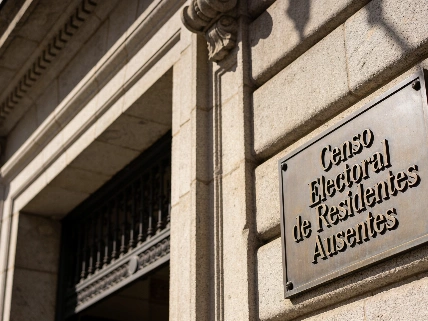
A Spanish judge authorized the wiretapping of Juan Carlos Barrabés’s phone in 2026. The measure, requested by the European Public Prosecutor, aimed to clarify alleged irregularities in Red.es contracts awarded five years earlier.
Spanish authorities authorized the interception of businessman Juan Carlos Barrabés’s phone in early 2026, five years after the public contracts at the center of a high-profile investigation. The decision, made by National Court judge Antonio Piña at the request of the European Public Prosecutor’s Office, allowed the Guardia Civil’s Central Operative Unit (UCO) to monitor Barrabés’s calls for two months. The surveillance was part of a broader probe into possible irregularities in contracts awarded by Red.es, a public entity under the Ministry of Digital Transformation.
The investigation focuses on two contracts worth €8.4 million, granted in 2021 to a consortium led by Innova Next, a company owned by Barrabés, and The Valley. Prosecutors are examining potential offenses including malfeasance, embezzlement, and influence peddling. Alongside Barrabés, Luis Prieto, director of Digital Economy at Red.es, is also under investigation. The case, which originated from proceedings involving Begoña Gómez, has since been split, with the European Public Prosecutor handling the contracts aspect from its Luxembourg headquarters.
Judge Piña justified the wiretap as both “appropriate and necessary,” citing contradictions between witness statements and internal Red.es emails analyzed by the UCO. The court order highlighted concerns that staff testimony might be influenced by hierarchical or employment ties to Prieto and Red.es. The goal was to uncover whether individuals above Prieto played a role in steering contracts toward Barrabés’s consortium.
Over 60 people have testified at the Madrid office of the European Public Prosecutor, including Begoña Gómez, who denied any government discussions about the contracts. Red.es employees consistently stated they faced no pressure or interference regarding the contract awards. However, UCO reports pointed to internal emails suggesting a preference for Barrabés’s bid within Prieto’s team, raising questions about the selection process.
The wiretap, conducted between March and April 2026, was part of a separate, confidential case file opened at the prosecutor’s request. According to sources cited in the investigation, the surveillance did not yield significant new evidence, and the measure was not extended. Spanish law restricts such interventions to cases involving crimes punishable by at least three years in prison or offenses linked to organized crime or terrorism.
Earlier, in 2024, Madrid’s Investigative Court No. 41, led by Judge Juan Carlos Peinado, had ordered a forensic copy of Barrabés’s phone. However, the Provincial Court later annulled this analysis and ordered the destruction of the data, citing insufficient justification and the businessman’s hospitalization at the time. The court emphasized that the pursuit of truth must respect legal boundaries.
The ongoing investigation has also examined letters of support Barrabés received for one of the contracts, including a letter from Begoña Gómez in her capacity as a university program director. The court has opened oral proceedings against Barrabés and recently expanded the inquiry to a third contract, investigating possible malfeasance and fraud against the interests of the European Union.
Red.es is a public agency responsible for promoting digital transformation in Spain, often managing significant EU-funded projects. The European Public Prosecutor’s Office, operational since 2021, has the authority to investigate and prosecute crimes affecting the EU’s financial interests. Its involvement in this case underscores the growing scrutiny of public procurement and the use of European funds in Spain. The outcome of the investigation could have implications for future oversight of public contracts and the accountability of officials involved in their adjudication.