Spain’s Audiencia Nacional is investigating who coordinated the July mass entry into Ceuta. Judge María Tardón has ordered biometric and financial analysis to identify those responsible. Authorities are under pressure to clarify the scale and planning behind the event.
Spain’s courts are now focused on the mass crossing at Ceuta’s border, as Judge María Tardón steps up efforts to identify those who organized the July surge. Authorities estimate that between 75,000 and 85,000 people crossed in just two days. The investigation is now centered on finding the planners, funders, and leaders who made such a large, coordinated movement possible.
The scale and organization of the crossing have drawn particular attention. Judge Tardón has ordered broad biometric and financial investigations, arguing that such a large operation required significant resources and planning. She has assigned both the National Police and the Centro Nacional de Inteligencia (CNI) to identify suspected "dynamizing agents" who may have guided migrants at the Moroccan border. Investigators are using international databases and facial recognition to match people seen in photos and videos.
Spain’s Audiencia Nacional has formally requested all alerts and risk analyses related to the Ceuta crossing, including details on when and to whom these warnings were sent.
Evidence from the Centro Nacional de Inmigración y Fronteras (CENIF) points to Moroccan gendarmerie agents, who are accused of helping groups reach Ceuta, sometimes even leading them through the water. Police reports, based on open-source videos and social media images, argue that the event was planned, not accidental or simply migratory. However, they do not name a specific state or organization as the main organizer.
Judge Tardón has asked for detailed reports on every identified agent, including their police affiliation, unit, rank, and actions. The investigation also covers digital communications to find out who promoted and coordinated the crossing, as well as financial flows—tracking group transport contracts, hawala systems, and any economic activity linked to moving such large numbers of people.
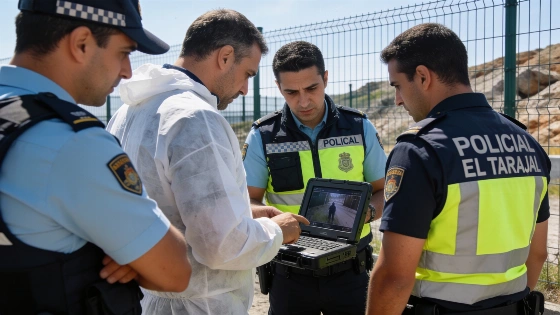
To piece together the full story, the judge has requested all available video and images: surveillance footage from the El Tarajal border post, satellite images from July 20 to August 7 between Fnideq and Ceuta, and any drone or fixed-camera recordings. She wants a single forensic report to map the timeline, identify participants, and trace their movements during those days.
According to AP, Spanish intelligence (CNI) had issued several classified warnings about a possible mass crossing from Morocco before the crisis, and the government has since declassified these documents. The investigation is also examining whether there were failures in the authorities' response and coordination, as highlighted by the Spanish prosecutor's office, which supports centralizing the case in Madrid.
The deaths that occurred during the crossing are also under review. With 83 fatalities reported, Judge Tardón has ordered forensic analysis to determine the causes and whether outside actions played a role. She plans to bring all related judicial proceedings under the Audiencia Nacional, combining the separate investigations underway in Ceuta.
Financial investigation is a key part of the case. The Unidad de Delincuencia Económica y Fiscal (UDEF) and the Unidad Central Operativa (UCO) are tracing suspicious financial movements, group transport arrangements, and any signs of organized funding. The judge may involve Sepblac, Spain’s anti-money laundering authority, if deeper financial links are found.
Digital platforms are also being investigated. Judge Tardón has formally asked Meta, WhatsApp, Facebook, TikTok, Telegram, and Google to help identify those who organized the crossing through social networks. She also wants to know if any public or private group requested satellite images of the border during the relevant period, instructing the tech firm HI Iberia to disclose any such requests.
Several local officials will be called to testify soon. The president of Ceuta, Juan Jesús Vivas, the former chief of staff of the Government Delegation, Gonzalo Sanz, and the head of the Local Police are scheduled to appear as witnesses at the end of September and early October. Judge Tardón has said that more summonses will follow as the investigation continues.
Authorities are also comparing this event with previous mass crossings in 2021 and 2024, looking for patterns and possible links between digital organizers and those on the ground. The judge’s approach is thorough, requiring that every angle—operational, financial, digital, and forensic—be examined in detail.
As the investigation continues, the Spanish government faces growing pressure to clarify its own role and what it knew about the events. The CENIF report, which reportedly surprised the Interior Minister, has already raised questions about coordination between agencies. The July crossing has exposed weaknesses in border management and intelligence sharing, similar to issues raised in earlier investigations into Spain’s response to emerging threats. The coming months will show whether the Spanish state can provide clear answers and accountability in this case.